


Knowledge base


What Is Hydrogenated Palm Oil – The Hydrogenation Process
Hydrogenation is a chemical reaction in which hydrogen gas, in the presence of a nickel catalyst, hydrogen is added across the double bonds of unsaturated fatty acids. This process converts liquid or semi-liquid fats into solid fats – which historically enabled the production of hard margarines, shortenings and confectionery fats from vegetable raw materials.
In the case of palm oil, which naturally contains approximately 45–55% saturated fatty acids, hydrogenation is applied mainly to obtain very narrow, sharply defined melting profiles – useful in certain confectionery applications and specialist fats. The degree of hydrogenation can be controlled, leading to two entirely different end products.
—
Also read: Palm oil and palm fat – production, properties and applications in the food industry
—
Fully Hydrogenated vs. Partially Hydrogenated Palm Oil – Key Differences
This distinction is today the most important from a regulatory and nutritional perspective. Partial and full hydrogenation yield two distinct products, despite their similar names.
| Parameter | Partially hydrogenated | Fully hydrogenated |
|---|---|---|
| Degree of hydrogenation | Partial (controlled) | Complete |
| Trans fats | Present (5–30%+, depending on process) | Trace / absent |
| Melting point | 30–45°C | 55–65°C |
| EU status | Effectively phased out (restricted by TFA regulation) | Permitted subject to trans fat limit <2% |
| Primary historical application | Margarines, shortening | Blends, structural fat components, confectionery products |
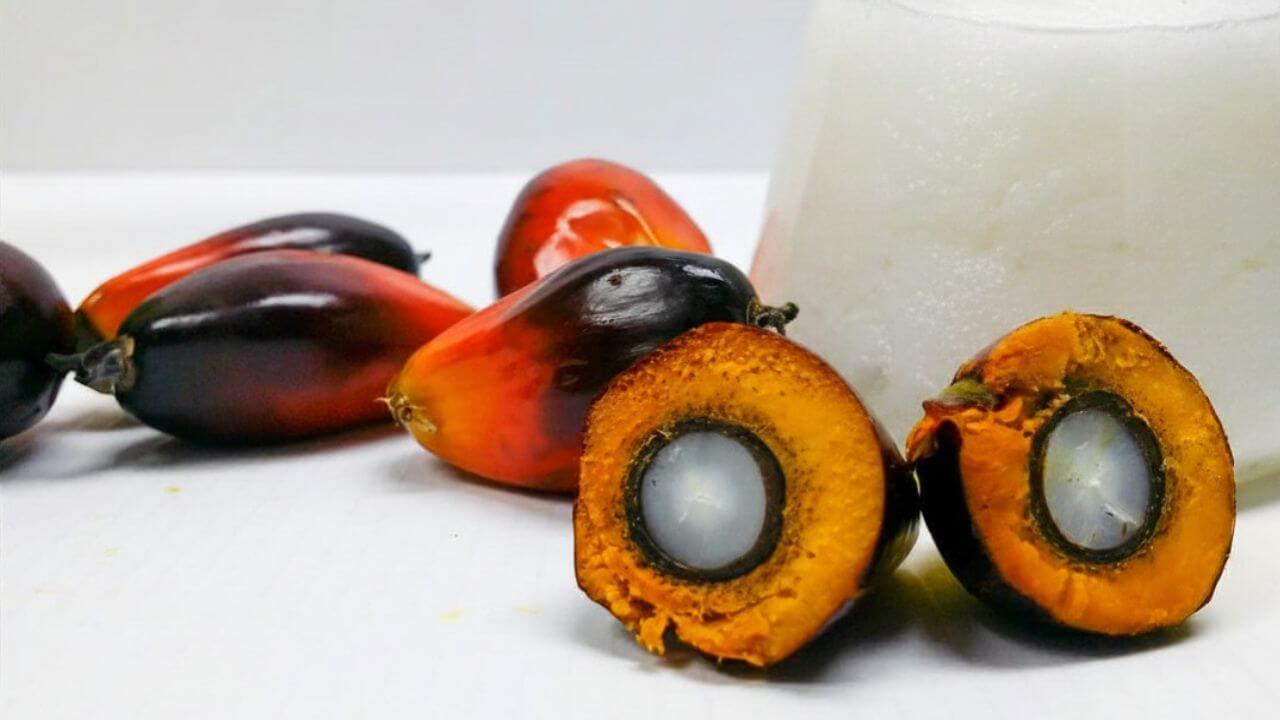
Fully Hydrogenated Palm Oil
Fully hydrogenated palm oil (FHPO) has a fatty acid profile dominated by stearic acid (60–70%) and palmitic acid (30–40%). It is one of the few saturated fats that in its unmodified form continues to find application in modern formulations – including as a structural component in trans-free shortenings, in blends with liquid oils (including interesterified fats), and in certain confectionery bases.
Partially Hydrogenated Palm Fat – Why It Was Withdrawn
Partial hydrogenation generated trans isomers of unsaturated fatty acids, which have a documented adverse effect on the lipid profile and cardiovascular risk. EU Commission Regulation 2019/649 set the maximum permitted level of trans fats (other than those naturally occurring in ruminant fat) at 2 g per 100 g of fat in food for the end consumer. This effectively eliminated partially hydrogenated palm fat from legal formulations.
Hydrogenated vs. Unhydrogenated Palm Oil – What to Choose for Production
The choice between hydrogenated and unhydrogenated palm oil depends on several technological variables:
- Required melting point of the finished product – unhydrogenated palm oil melts at 36–38°C, palm stearin at 52–54°C, and FHPO above 55°C.
- SFC (Solid Fat Content) profile across the 10–35°C temperature range – critical for the texture of confectionery products, coatings, creams and fillings.
- Oxidative stability over extended production cycles and during storage.
- Clean label policy – unhydrogenated palm oil aligns better with “natural ingredients” messaging, though it requires consideration of sustainable origin certification.
- Raw material cost – discussed in more detail below.
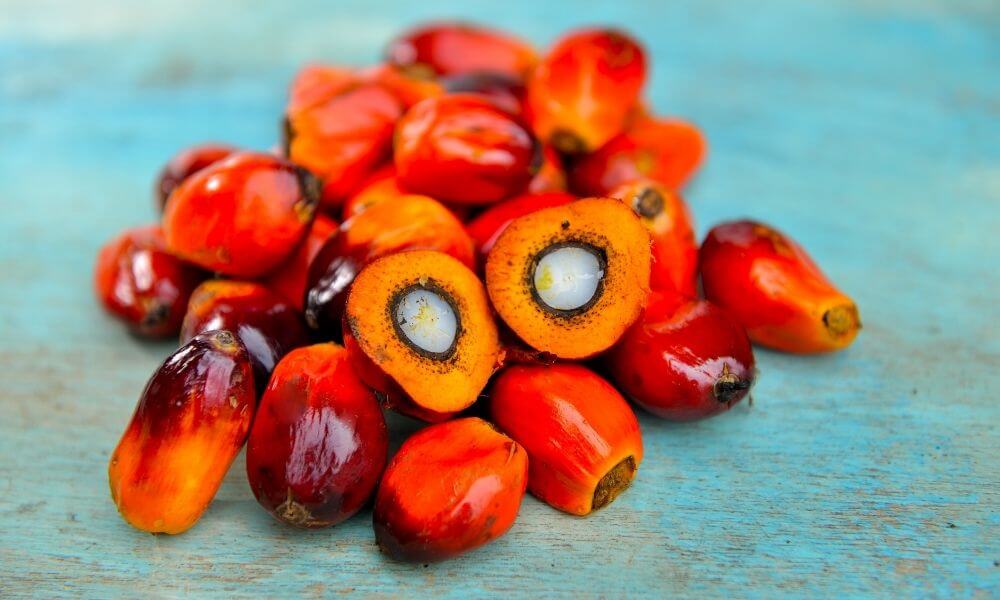
In practice, the majority of industrial applications today are met using unhydrogenated palm oil, its fractions (palmolein, palm stearin), blends with liquid oils or interesterified fats – which allows the desired technological properties to be achieved without the need for hydrogenation.
Hydrogenated Palm Fat – Industrial Applications
Hydrogenated palm fat in its fully hardened form finds application today primarily where a high, sharply defined melting point and full structural stability are required:
- shortenings for bakery products requiring extended processing cycles,
- a feedstock for enzymatic interesterification (as a stearic acid residue donor),
- bases for specialist CBS (Cocoa Butter Substitute) fats,
- protective coatings on ice cream and wafers,
- certain popcorn fats requiring high oxidative and thermal stability.
In each of these cases, FHPO is introduced as one component of the formulation – rather thanas the sole fat – to achieve a specific structural effect while maintaining zero trans fat content.
Hydrogenated Palm Oil – Price and Cost Factors
Hydrogenated palm oil price is a query that frequently comes from procurement departments. From our perspective, it is not possible to give a single fixed price, as the cost depends on several variables:
- Base palm oil market quotations on commodity exchanges (CPO futures, including Bursa Malaysia and ICDX) – subject to significant seasonal and weather-related fluctuations.
- Degree of hydrogenation – full hardening requires greater hydrogen consumption, a longer process and increases the unit cost.
- Starting fraction – the cost of hardened palm stearin differs from that of hardened palmolein.
- RSPO certification – SG (Segregated) or IP (Identity Preserved) grades are more expensive than MB (Mass Balance).
- Order volume, packaging and logistics – the unit cost of a tanker delivery differs from that of an IBC pallet or a pallet of unit-sized packaging.
- Current exchange rates (USD/PLN, MYR/PLN) and freight costs from South-East Asia.
—
Also read: Quality Matters – RSPO Certification as a Commitment to Sustainable Development
—
We prepare every quotation individually – taking into account the specific requirements, volume and delivery frequency.
FAQ – Frequently Asked Questions
Does fully hydrogenated palm oil contain trans fats?
No. Full hydrogenation eliminates all double bonds, so no trans isomers are formed. The raw material does, however, contain a very high proportion of saturated fatty acids (mainly stearic and palmitic).
What is the difference between hydrogenated palm oil and palm stearin?
Palm stearin is the solid fraction of palm oil obtained physically by fractionation – without any chemical modification of the fatty acid structure. Hydrogenation is a chemical reaction that alters the fatty acid profile.
Is hydrogenated palm fat safe for use in food production?
Fully hydrogenated – yes, within approved applications and with appropriate catalyst purity controls. Partially hydrogenated – does not meet current EU regulatory requirements with respect to trans fats.
Can hydrogenated palm oil be replaced in a formulation?
Yes, most commonly using unhydrogenated palm stearin, interesterified blends or coconut oil fractions – each project requires individual SFC analysis and evaluation of the technological parameters involved.
Is hydrogenated palm oil suitable for frying?
In practice – no. Frying requires oil with low SFC at frying temperatures and high oxidative stability, which palmolein or palm oil-based frying fats meet more effectively.
Working with Rafsol Group
We advise on the selection of the appropriate type and degree of hydrogenation for specific applications, and supply raw materials with full documentation – including RSPO certificates and analyses of process contaminants. We also develop dedicated blends that eliminate the need for hydrogenated products.
Send an enquiry with a description of your application and process parameters – our technology department will prepare a raw material recommendation and an individual quotation.