


Knowledge base
Palm oil and palm fat are raw materials whose importance can scarcely be overstated – they account for nearly 35% of global vegetable oil production and are present in virtually every segment of the food industry. Understanding precisely their characteristics, how they are produced and how the various fractions differ is a prerequisite for any technologist or procurement manager making informed decisions on formulations and suppliers.
In brief:
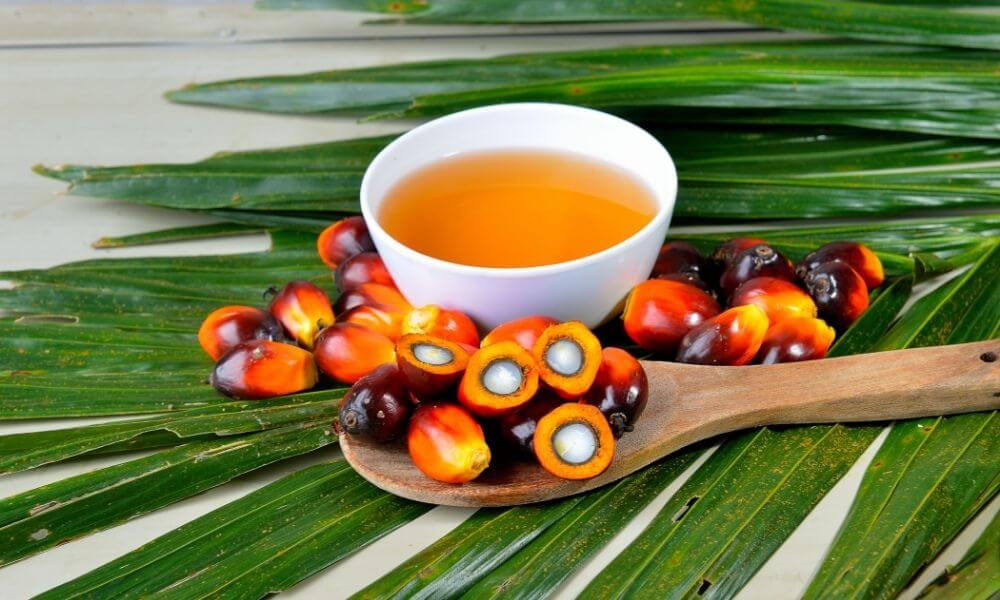
Polish nomenclature can be imprecise – “palm vegetable fat” in a label declaration typically refers to oil from the mesocarp, but in some products it denotes palm kernel oil or a blend of both. Current EU regulations require the specific vegetable origin of oils and fats to be declared (e.g. “palm oil”), but they do not require manufacturers to indicate whether the ingredient is derived from the fruit mesocarp or the kernel of the oil palm.
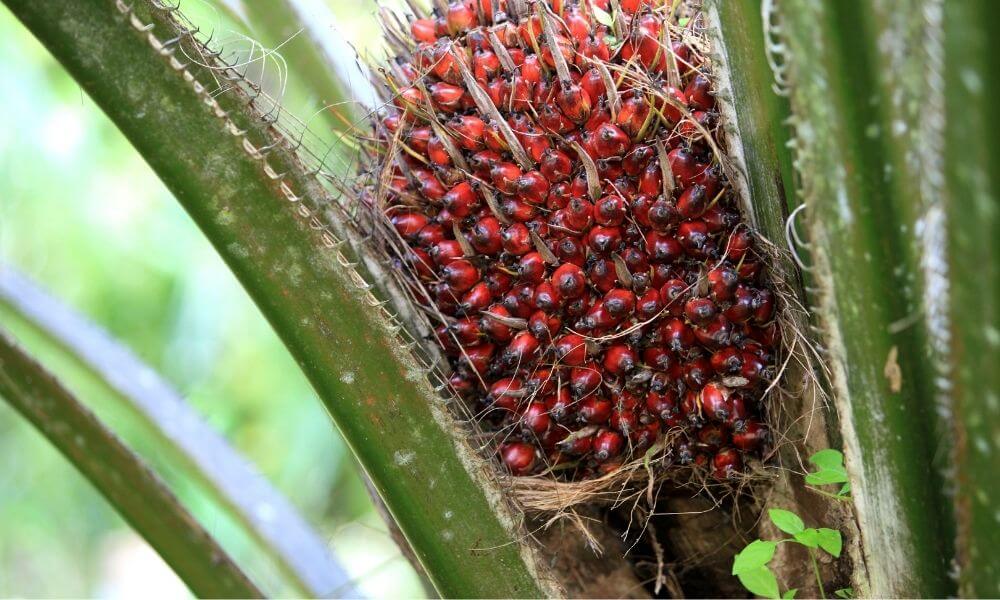 Palm oil extraction begins with the cutting of fresh fruit bunches (FFB), which must reach the mill within 24–48 hours to prevent the development of free fatty acids. In modern facilities, the first stage is typically steam sterilisation (to halt fermentation and facilitate separation of the fruit from the bunches), followed by mechanical threshing. Only then do the fruits proceed to pressing. Pressing is performed primarily by mechanical means – crude palm oil is extracted from the fruit, and palm kernel oil (PKO) is obtained separately from the seeds.
Industrial production of palm oil involves a series of processing stages that begin on the plantation and culminate in the refinery, where crude palm oil is refined to obtain a product suitable for food applications.
Palm oil production involves the following stages:
The resulting CPO (crude palm oil) still contains approximately 3–5% free fatty acids, phospholipids, carotenoids and other components, and therefore proceeds to refining.
Standard physical refining involves degumming (removal of phospholipids), bleaching (using bleaching earth to reduce colourants and contaminants) and deodorisation (removal of free fatty acids and volatile aromatic compounds under high temperature and vacuum). The result is refined palm oil (RBD – refined, beached, deodorised – palm oil) – light yellow, neutral in odour and ready for further processing.
How are fractionated variants of palm oil produced? The most widely used method is dry fractionation. Refined palm oil is subjected to controlled cooling, causing the solid fraction (palm stearin) to crystallise out, while the liquid fraction (palm olein) remains. The two fractions are then separated mechanically. The process can be repeated to yield increasingly specialised fractions – such as super olein or hard stearin – used in specialised confectionery applications.
Although less common than dry fractionation, solvent fractionation involving controlled dissolution of the oil in a solvent and selective crystallisation of its components, followed by their separation. After the process is complete, the solvent must be evaporated or distilled off.
The fatty acid composition of palm oil is very well defined and changes little from batch to batch.
What does palm oil contain beyond fatty acids? In its crude form, the unsaponifiable fraction contains appreciable levels of tocotrienols and tocopherols (vitamin E), carotenoids (beta-carotene and alpha-carotene, precursors of vitamin A), phytosterols (β-sitosterol, campesterol), squalene, coenzyme Q10 (ubiquinone). Most of these bioactive components are lost during refining, and refined palm oil therefore contains considerably lower levels.
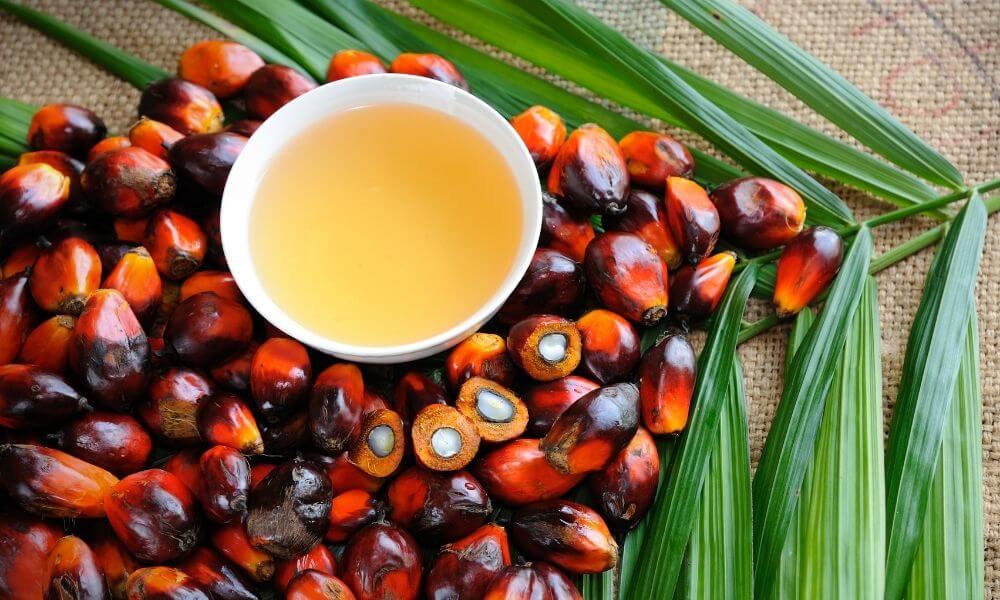
The high palmitic acid content confers natural oxidative stability and a semi-solid consistency on palm oil. The significant proportion of oleic acid, in turn, means that palm oil is liquid at tropical temperatures (33–39°C) – which distinguishes it from coconut oil, in which the proportion of saturated fatty acids is considerably higher.
Tocotrienols from palm oil are the subject of active scientific research – they exhibit higher antioxidant activity than that of conventional tocopherols. Carotenoids are used as functional additives in certain products (e.g. margarines derived from red palm oil), but in the main production stream they are removed to achieve a neutral colour.
The key technological properties of palm oil are:
The properties of fractionated palm fat differ significantly: palm olein (liquid fraction) has a lower melting point (approximately 20–24°C) and is suitable for frying, while palm stearin (solid fraction) melts at around 48–55°C and finds application in shortenings, bakery margarines and coatings.
Palm oils available in the B2B trade fall into several categories with different intended uses:
Non-hydrogenated palm fat (NH, non-hydro) may be labelled as “non-hydrogenated” – a declaration that is significant for manufacturers and customers with specific requirements.
Palm oil applications span virtually all segments of the food industry – owing to the combination of natural consistency, oxidative stability, neutral tasteand competitive price.
In each of these applications, the correct selection of palm oil fraction determines the quality of the finished product – a different SFC is required for an ice cream coating, another for a thin decorative glaze and yet another for a long-life filling.
In brief:
- Palm oil is derived from the fruit mesocarp of the oil palm (Elaeis guineensis); oil from the kernel of the same palm (palm kernel oil) has a different composition and is not the same product.
- How palm oil is produced – from the mesocarp (fruit pulp) by pressing and extraction, typically followed by refining.
- Palm fat composition – approximately 50% saturated fatty acids, 40% monounsaturated and 10% polyunsaturated – this profile gives the product its semi-solid consistency at room temperature.
- Palm oils are split into fractions: palm olein (liquid) and palm stearin (solid).
- Palm oil may be subjected to chemical modification, such as interesterification or hydrogenation.
- Palm oil applications include frying fats, margarines, confectionery fats, ice cream, wafers, popcorn fats, chocolate coatings and many other food industry applications.
What is palm oil? Definition and origin from the oil palm
What is palm oil from a technological perspective? It is a vegetable oil obtained from the mesocarp (fruit pulp) of the oil palm. In its crude form (CPO – crude palm oil), it has an intensely red colour due to carotenoids, a characteristic odour and a semi-liquid consistency. After refining, it takes on a yellowish colour and a neutral odour – in this form it reaches the majority of industrial applications. For terminological clarity: two distinct products from the oil palm are encountered in trade and should not be confused.| Raw material | Origin | Primary fatty acids | Consistency at 20°C |
| Palm oil | Fruit mesocarp | Palmitic, oleic | Solid, moderately soft |
| Palm kernel oil | Seed (kernel) | Lauric, myristic | Solid, firm |
The oil palm – from which palm oil is obtained
The oil palm (Elaeis guineensis) is a plant originating from West Africa, today cultivated primarily in Indonesia and Malaysia (together accounting for approximately 85% of global production), as well as in Thailand, Colombia, Nigeria and Guatemala. A single palm bears fruit for approximately 25 years, yielding 10–15 tonnes of fresh fruit bunches per hectare per year, corresponding to around 3–5 tonnes of oil per hectare – making it the highest-yielding oilseed crop by land area, which is significant from both an economic and an environmental perspective.
Palm oil extraction begins with the cutting of fresh fruit bunches (FFB), which must reach the mill within 24–48 hours to prevent the development of free fatty acids. In modern facilities, the first stage is typically steam sterilisation (to halt fermentation and facilitate separation of the fruit from the bunches), followed by mechanical threshing. Only then do the fruits proceed to pressing. Pressing is performed primarily by mechanical means – crude palm oil is extracted from the fruit, and palm kernel oil (PKO) is obtained separately from the seeds.
Palm fat versus palm oil – are they the same?
Palm fat and palm oil are terms often used interchangeably – but strictly speaking, “oil” usually refers to a product in liquid (or semi-liquid) state, while “fat” refers to a solid or semi-solid product. Palm oil at 20°C sits at the boundary between these states, so both terms are correct and used interchangeably. Under EU food-labelling legislation, manufacturers are required to indicate the specific botanical origin of vegetable oils and fats (e.g. palm). Depending on the nature of the ingredient, both the terms vegetable oil (palm) and vegetable fat (palm) may be used in ingredient declarations.How palm oil is produced – manufacturing and extraction
Industrial production of palm oil involves a series of processing stages that begin on the plantation and culminate in the refinery, where crude palm oil is refined to obtain a product suitable for food applications.
Stages of palm oil production
Palm oil production involves the following stages:
- Bunch sterilisation – steam treatment under pressure (130–140°C, approximately 60–90 minutes), which inactivates lipolytic enzymes and facilitates separation of the fruit from the bunches.
- Fruit threshing – separation of fruit from empty fruit bunches (EFB) in drum separators.
- Digestion – maceration and mechanical release of oil from mesocarp cells at approximately 90–95°C.
- Pressing – in screw presses, where oil, fibre and kernels are separated.
- Clarification – removal of water and solids from the crude oil by sedimentation and centrifugation.
- Vacuum drying – to a moisture content below 0.15%.
The resulting CPO (crude palm oil) still contains approximately 3–5% free fatty acids, phospholipids, carotenoids and other components, and therefore proceeds to refining.
Refining and fractionation
Standard physical refining involves degumming (removal of phospholipids), bleaching (using bleaching earth to reduce colourants and contaminants) and deodorisation (removal of free fatty acids and volatile aromatic compounds under high temperature and vacuum). The result is refined palm oil (RBD – refined, beached, deodorised – palm oil) – light yellow, neutral in odour and ready for further processing.
How are fractionated variants of palm oil produced? The most widely used method is dry fractionation. Refined palm oil is subjected to controlled cooling, causing the solid fraction (palm stearin) to crystallise out, while the liquid fraction (palm olein) remains. The two fractions are then separated mechanically. The process can be repeated to yield increasingly specialised fractions – such as super olein or hard stearin – used in specialised confectionery applications.
Although less common than dry fractionation, solvent fractionation involving controlled dissolution of the oil in a solvent and selective crystallisation of its components, followed by their separation. After the process is complete, the solvent must be evaporated or distilled off.
Composition of palm oil – what palm fat contains
The fatty acid composition of palm oil is very well defined and changes little from batch to batch.
| Fatty acid | Content in palm oil | Character |
| Palmitic (C16:0) | 43–45% | Saturated |
| Stearic (C18:0) | 4–5% | Saturated |
| Oleic (C18:1) | 39–40% | Monounsaturated |
| Linoleic (C18:2) | 9–11% | Polyunsaturated |
| Other | <2% | – |
What does palm oil contain beyond fatty acids? In its crude form, the unsaponifiable fraction contains appreciable levels of tocotrienols and tocopherols (vitamin E), carotenoids (beta-carotene and alpha-carotene, precursors of vitamin A), phytosterols (β-sitosterol, campesterol), squalene, coenzyme Q10 (ubiquinone). Most of these bioactive components are lost during refining, and refined palm oil therefore contains considerably lower levels.
Fatty acid profile
The high palmitic acid content confers natural oxidative stability and a semi-solid consistency on palm oil. The significant proportion of oleic acid, in turn, means that palm oil is liquid at tropical temperatures (33–39°C) – which distinguishes it from coconut oil, in which the proportion of saturated fatty acids is considerably higher.
Bioactive components
Tocotrienols from palm oil are the subject of active scientific research – they exhibit higher antioxidant activity than that of conventional tocopherols. Carotenoids are used as functional additives in certain products (e.g. margarines derived from red palm oil), but in the main production stream they are removed to achieve a neutral colour.
Technological properties of palm oil
The key technological properties of palm oil are:
- Melting point in the range of 33–39°C (standard fraction), which gives the product natural plasticity at room temperature.
- High oxidative stability (Rancimat at 100°C: 20–40 hours), considerably higher than that of polyunsaturated oils.
- Smoke point of refined palm oil: 230–235°C.
- Solid fat content (SFC) profile that changes gradually across the 10–40°C range, making palm oil suitable for formulations requiring controlled texture across a wide temperature window.
- No requirement for hydrogenation to achieve a semi-solid consistency – which distinguishes it from liquid oils (rapeseed, sunflower, soya).
The properties of fractionated palm fat differ significantly: palm olein (liquid fraction) has a lower melting point (approximately 20–24°C) and is suitable for frying, while palm stearin (solid fraction) melts at around 48–55°C and finds application in shortenings, bakery margarines and coatings.
Non-hydrogenated and hydrogenated palm oil – types
Palm oils available in the B2B trade fall into several categories with different intended uses:
- Non-hydrogenated palm oil (RBD palm oil) – standard refined raw material, without chemical modification.
- Palm olein – the liquid fraction; the primary raw material for the production of frying fats and frying blends.
- Palm stearin – the solid fraction; a component of margarines and shortenings.
- Palm kernel oil (PKO) – a separate product, similar in profile to coconut oil.
- PKO fractions (palm kernel olein, palm kernel stearin) – used primarily in CBS and CBR chocolate coating fats.
- Interesterified fats – enzymatically or chemically modified blends of palm oil with liquid oils.
- Hydrogenated palm oil – used today almost exclusively in fully hydrogenated form.
Non-hydrogenated palm fat (NH, non-hydro) may be labelled as “non-hydrogenated” – a declaration that is significant for manufacturers and customers with specific requirements.
Applications of palm oil in the food industry
Palm oil applications span virtually all segments of the food industry – owing to the combination of natural consistency, oxidative stability, neutral tasteand competitive price.
| Segment | Fraction | Function in product |
| Frying fats and frying applications | Olein | High smoke point, stability |
| Bakery margarines | Stearin, blends | Structure, plasticity |
| Confectionery fats | Olein, stearin | Texture, melt profile |
| CBS | PKO fractions | Rapid crystallisation |
| Ice cream and wafers | Olein, stearin | Texture, controlling melting behaviour |
| Popcorn fats | Olein with additives | Flavour, texture |
| Dairy fat alternatives | Blends | Milk fat replacers |
In each of these applications, the correct selection of palm oil fraction determines the quality of the finished product – a different SFC is required for an ice cream coating, another for a thin decorative glaze and yet another for a long-life filling.