


News
- The EUDR covers seven relevant commodities: cattle, cocoa, coffee, palm oil, rubber, soya and wood, together with selected derived products listed in Annex I.
- The deadlines have been postponed for a second time – large and medium-sized operators apply the rules from 30 December 2026, micro and small operators from 30 June 2027.
- Not every participant in the chain submits its own due diligence statement (DDS) – following the December 2025 amendment, this obligation rests solely with the operator that first places the raw material on the EU market. Downstream operators and traders may be subject to registration, information and traceability obligations.
- Product scope is defined by CN/HS codes, not by composition – palm oil falls under the EUDR, but finished margarine or interesterified fat do not appear in Annex I.
- Rapeseed and sunflower oils remain entirely outside the scope of the Regulation, which for some formulations is the simplest route to reducing the compliance burden.
What is the EUDR and which raw materials does the Regulation cover?
The EUDR (EU Deforestation Regulation) is Regulation (EU) 2023/1115 of the European Parliament and of the Council, which replaced the earlier EU Timber Regulation (EUTR) and brought a considerably broader range of commodities within its remit. Its mechanism is simple in principle: a product within the scope of the Regulation may be placed on the EU market or exported from it only if it does not originate from land deforested or degraded after 31 December 2020, was produced legally in the country of production and is covered by a due diligence statement.
The Regulation covers seven commodity groups: cattle, cocoa, coffee, palm oil, rubber, soya and wood. Three of these are of practical importance to the fats industry – palm oil, soya (soybean oil, lecithin) and cocoa, where formulations contain cocoa butter or its constituents.
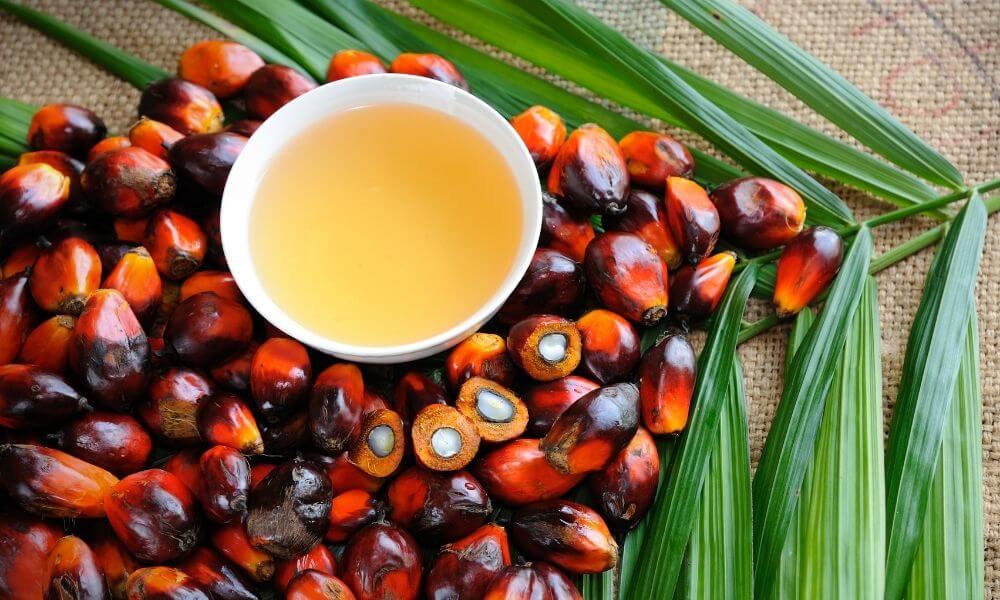
One principle is crucial and easily overlooked: whether a product falls under the Regulation follows from the CN/HS code listed in Annex I, and not from the mere fact that the product contains a regulated raw material. A composite product whose CN code does not appear in the Annex is not subject to a separate due diligence procedure – even though its ingredient was subject to that procedure at an earlier stage of trade. This does not mean, however, that the regulated raw material can be disregarded. If palm oil, for example, falls under the EUDR at an earlier point in the chain, its compliance and traceability may be relevant to subsequent operators in the supply chain.
EUDR directive or EUDR regulation – where does the confusion come from?
The term “EUDR directive” is in common use but is inaccurate – the EUDR is a regulation, not a directive. The difference is not cosmetic. A directive requires transposition into national law and leaves Member States a degree of discretion as to how it is implemented. A regulation applies directly in all EU Member States, in identical wording and without the intermediary of a national act.
The practical consequence: there is no point in waiting for Polish legislation in order to learn what your obligations are – they follow directly from the EU text. The Polish implementing act (draft UC101) will determine only the supervisory structure, the competent authorities and the inspection procedure. The terminological confusion arises mainly because the EUDR is often lumped together with the ESG regulatory package, which does indeed contain directives such as the CSRD and the CSDDD.
When does the EUDR apply from? Deadlines following the December 2025 amendment
The EUDR entered into force on 29 June 2023, but most of its key obligations will begin to apply from 30 December 2026. The EUDR application dates have been postponed twice, and it is precisely on this point that a great deal of online material is already out of date. The current timetable follows from Regulation (EU) 2025/2650, adopted in December 2025, which in addition to the deferral also introduced a substantial reform of the structure of obligations.
| Operator category | Date from which the main EUDR obligations apply |
|---|---|
| Large and medium-sized operators | 30 December 2026 |
| Micro and small operators previously covered by the EUTR (wood) | 30 December 2026 |
| Other micro and small operators | 30 June 2027 |
| New product categories under the delegated act of July 2026 | 30 December 2027 (once the act enters into force) |
For micro and small enterprises, what matters is not only the size criterion itself but also whether the enterprise meets the conditions set out in the transitional provisions. In its current guidance the Commission indicates that, for enterprises qualifying as micro or small entities as at 31 December 2024, the basic deadline is 30 June 2027, with the exception of certain wood products previously covered by the EUTR.
The date itself is worth noting: the obligations do not start on 1 January 2027 but two days earlier, still within the holiday period. For plants planning deliveries over the turn of the year, this has logistical implications.
In May 2026 the European Commission published a simplification package – a review report, updated guidance and FAQs, a draft delegated act amending Annex I and an announcement of changes to the IT system. The package was finalised on 13 July 2026. The simplifications did not, however, change the deadlines and did not reopen the main text of the Regulation. As at the date of publication, the delegated act amending the product list is subject to scrutiny by the Parliament and the Council, and its new provisions should not be treated as the currently applicable scope of the EUDR. Under its present wording, the new products added by that act are to fall within the Regulation from 30 December 2027. This concerns, among other things, certain palm oil derivatives. Until the act enters into force, a distinction must be drawn between the Annex I currently in force and the scope provided for in the adopted delegated act, which is still under scrutiny.
Who submits a DDS and who only passes on a reference number?
The December 2025 amendment shifted the burden of due diligence to the start of the supply chain, and this is the most important change for food processors. A category of “downstream operator” was introduced and the number of entities required to submit their own due diligence statements was significantly reduced. Downstream operators and traders do not submit their own DDS solely because they go on to trade in a product covered by the EUDR.
Downstream operators and traders must hold specified information concerning the product and their counterparties. This includes, among other things, details of the entity that supplied the product and, where the supplier is an operator, also the DDS reference number or the declaration identifier. They must also keep the required information for at least five years and make it available to the competent authorities on request.
The first downstream operator or the first trader is of particular importance for traceability, since it is the party that collects DDS reference numbers or simplified declaration identifiers from suppliers that are operators. This obligation is not, however, imposed in the same way on every subsequent link in the chain. The Commission also clarifies that it is a passive obligation – a downstream operator is not required to conduct an active investigation in order to establish the number if it does not receive it from the supplier.
The size of the enterprise is also a relevant distinction. Large and medium-sized downstream operators must register in the EU information system before placing the relevant products on the market, making them available on the market or exporting them.
Downstream operators are also required to react if they obtain new information indicating a risk that a product does not comply with the EUDR. In specified cases they must inform the competent authorities and other operators further along the supply chain.
The simplification is therefore very specific in nature: a downstream operator does not repeat the full due diligence procedure carried out by an earlier operator, but must still fulfil defined information, traceability and risk-response obligations.
Penalties for infringement include, among others, fines, confiscation of products and other measures set out in the Regulation and in national legislation. In the case of a legal person, the maximum amount of the fine set out in the EUDR is to be at least 4% of total annual EU-wide turnover in the financial year preceding the decision to impose the fine, with the level of the penalty required to deprive the entity of the economic benefit obtained from the infringement.
Palm oil and the EUDR – which fats appear in Annex I?
Palm oil is one of the raw materials most strongly associated with deforestation, and it generates the majority of EUDR obligations in the fats industry. Annex I to the Regulation lists specific CN codes rather than general product categories – which is why verification always begins with establishing the correct code for the particular product line.
| CN code | Product |
|---|---|
| 1207 10 | Palm nuts and kernels |
| 1511 | Palm oil and its fractions, whether or not refined, but not chemically modified |
| 1513 21, 1513 29 | Palm kernel oil and its fractions, crude and refined |
| 2306 60 | Oil-cake and other solid residues from palm nuts or kernels |
| ex 2905 45 | Glycerol of a purity of 95% or higher |
| 2915 70, 2915 90 | Palmitic acid, stearic acid, their salts and esters, and others |
| 3823 11, 3823 12, 3823 19, 3823 70 | Industrial fatty acids and fatty alcohols |
Equally important is the principle that the product must in fact be covered by the specific Annex entry. It cannot be assumed that every product chemically or technologically related to palm oil will automatically fall under the EUDR. What matters is the specific code and description in Annex I.
The principle of species of origin also applies. Palmitic acid produced from palm oil falls under the EUDR, whereas the same acid obtained from coconut oil does not, because the coconut palm is not a relevant commodity within the meaning of the Regulation. By the same token, palm oil from Elaeis guineensis is covered, but babassu oil from Attalea speciosa is not.
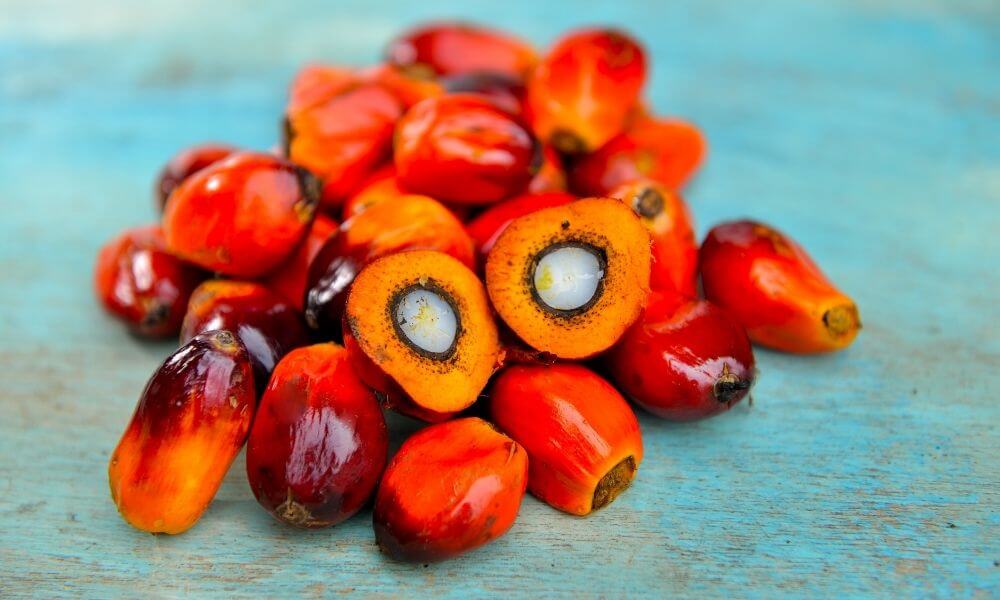
The July delegated act provides for this list to be extended to include selected palm oil derivatives used in oleochemistry – fatty alcohols and fatty acids, soaps and some polyethers – with an application date of 30 December 2027. The act has not yet entered into force, however, and for that reason should not currently be treated as the applicable scope of Annex I.
Do margarines and hydrogenated fats fall under the EUDR?
Finished margarines (CN 1517) and hydrogenated and interesterified fats (CN 1516) do not appear in Annex I to the EUDR, even though they may be manufactured from raw materials covered by the Regulation. This follows from the way the provision is constructed: the obligations apply to products identified by CN code, not to every product containing a regulated ingredient. The Commission illustrates this principle with the example of soap – even if made entirely from palm oil, it does not fall under the EUDR as an end product until its code is added to the Annex.
This is an important distinction: the EUDR does not cover every food product containing an ingredient derived from a relevant commodity. The product must be listed in Annex I.
That does not mean, however, that the subject disappears from a margarine manufacturer’s field of view. The palm oil used in production was subject to due diligence at an earlier stage of trade, and the DDS reference number remains part of the raw material documentation. What changes is the nature of the obligation – from active due diligence to maintaining continuity of traceability.
In practice, therefore, two questions must be kept apart:
- whether the specific end product is listed in Annex I, and
- what obligations apply to the EUDR-regulated raw material used earlier in the supply chain.
Caution is advisable here for two reasons. First, the customs classification of a given product line can be contentious – the case law of the CJEU has already addressed the problem of distinguishing between headings 1511 and 1517 for refined palm oil. Second, Annex I is subject to amendment by way of delegated acts. Each product line is worth verifying against its correct CN code, rather than assuming its status on the basis of a trade name.
Rapeseed, sunflower and coconut outside the scope of the EUDR
Rapeseed, sunflower and coconut oils are not covered by the EUDR in any form – neither as raw materials nor as derived products. They do not appear on the list of seven relevant commodities.
For purchasing departments this is information of strategic significance. Formulations based on these raw materials generate no EUDR documentation obligations whatsoever – they require no collection of reference numbers, no monitoring of changes to Annex I and no preparation of procedures in the event of an inspection.
This is not an argument for withdrawing palm oil from formulations, because its technological functions – SFC profile, oxidative stability, texture – are often irreplaceable without a loss of product parameters. It can, however, be a genuine factor in the design of new products, particularly where the raw material decision has yet to be settled and the end customer expects a palm-free declaration.
—
Also read: How Is Rapeseed Oil Made? Rapeseed Oil Production Step by Step
Also read: Palm-Free Margarine – How to Select a Palm-Free Fat for Bakeries and Confectioneries
—
RSPO certification and the EUDR – is certification enough for compliance?
RSPO certification does not replace the due diligence required by the EUDR, and this is one of the most common misunderstandings in conversations with customers. Both systems concern sustainable palm oil, but they rest on different criteria and a different evidentiary logic.
RSPO is a voluntary industry standard whose environmental and social criteria are broader than the scope of the EUDR, covering matters such as working conditions and relations with local communities. The EUDR is a piece of legislation that requires hard data: geolocation coordinates of the plots of production, evidence of legality of production and confirmation that no deforestation has occurred after 31 December 2020.
In practice the two systems complement each other. RSPO certification makes it considerably easier to assemble the documentation required by the EUDR and shortens the route to suppliers capable of providing it, but in itself it does not constitute proof of compliance with the Regulation. A customer seeking confirmation of EUDR compliance should ask for the DDS reference number, not for the RSPO certificate number.
The EUDR in practice at Rafsol Group – what it means for deliveries to our Customers
Rafsol Group purchases palm oil and palm fats from suppliers operating within the European Union. We do not import these raw materials into the EU, nor do we place them on the EU market for the first time, which positions us at a downstream stage of the supply chain within the meaning of the EUDR.
This means that the due diligence obligations relating to the initial placing of the product on the EU market – including obtaining the required information on the origin of the raw material and submitting the appropriate statement in the EUDR system – are fulfilled by an entity at an earlier stage of the supply chain, in accordance with its status under the EUDR.
What does this mean for you?
1. Traceability of products covered by the EUDR
For products falling within the scope of the EUDR, Rafsol Group will collect the information and reference numbers of the relevant due diligence statements (DDS) received from entities at an earlier stage of the supply chain, to the extent required by the EUDR.
We will seek to ensure that the DDS reference number can be linked to a specific delivery or product, and to pass on the required information to our customers where such an obligation arises under the EUDR.
This process is currently being implemented at our suppliers. Not all refineries have yet confirmed that their systems are ready to handle the EUDR, and for that reason the manner in which data and reference numbers are transmitted will be progressively standardised on our side.
2. Rafsol as a downstream operator
Where raw material is purchased from an EU-based entity, Rafsol Group does not repeat the full due diligence procedure for that same raw material solely because the product is subsequently traded on or used further.
The scope of Rafsol Group’s obligations does, however, depend on the role we perform in relation to a specific product and goods flow. This applies both to products purchased and processed by Rafsol and to transactions in which the raw material is delivered directly from the refinery to the customer while Rafsol participates in the commercial transaction.
For products covered by the EUDR, it is therefore essential to assign the product correctly to the appropriate status in the supply chain and to ensure the required documentation is in place.
3. Blends and products containing palm ingredients
Rafsol Group also uses palm oils and fats to manufacture mixtures and blends, such as rapeseed–palm blends and products containing various fat fractions.
In such cases, the way in which the end product is linked to the EUDR documentation for the raw material used will be determined within our traceability procedure.
We pay particular attention to ensuring that the connection between a raw material covered by an earlier DDS and the product in which that raw material has been used can be demonstrated.
4. Rapeseed and sunflower products
Rapeseed and sunflower oils and fats, which are not among the products listed in Annex I to the EUDR, remain outside the scope of the Regulation.
When designing new formulations it is therefore worth verifying, in each case, both the composition of the product and its correct CN/HS code, because coverage by the EUDR is determined by the scope of the Regulation and the classification of the specific product, and not solely by the trade name of the raw material.
5. Customs classification of products
In the case of palm oils and fats, the tariff headings covering palm oil and palm kernel oils and fractions are of particular relevance.
By way of example, our business includes products classified under headings 1511 and 1513 21. The full CN code and the product description should nevertheless be verified in each individual case, since the scope of the EUDR may cover only certain products within a given heading.
For this reason, we recommend verifying CN classification at the stage of designing a new product or formulation, rather than only once sales have begun.
Sales and direct deliveries from the refinery
In some transactions Rafsol Group acts as a party to the commercial transaction while physical delivery takes place directly from the refinery to the customer.
In such cases we will organise the flow of EUDR information between supplier and customer accordingly, so as to ensure that the required documentation can be linked to a specific delivery.
The approach taken will depend on the status of the individual entities involved and on the type of product within the meaning of the EUDR.
Export outside the European Union
Export of products covered by the EUDR currently accounts for a small part of our business. Separate EUDR rules on export apply to transactions involving shipment outside the EU.
Should export transactions involving EUDR products arise, their handling will be verified in each case in terms of product status, the entities participating in the transaction and the documentation required.
If you have any questions about the regulatory status of a particular product, formulation or product line, please contact your account manager at Rafsol Group.
It is worth verifying EUDR scope and CN codes as early as the product or formulation design stage. This makes it possible to establish documentation and traceability requirements across the supply chain well in advance.
How to prepare a purchasing department for the EUDR? Checklist
The deferral of the deadlines is no reason to put preparations on hold – market experience shows that full implementation in an organisation with a complex purchasing structure takes anything from several months to well over a year. The list below sets out the order in which to proceed.
- Establish your role in the supply chain for each commodity group separately. Importers, first downstream operators and subsequent links in the chain have different scopes of obligation, and a single company may act in several roles at once.
- Verify the CN codes of all purchasing and sales items against the current version of Annex I. This is the most common source of mistaken assumptions.
- Establish your company’s size status according to the EU definition of an SME – this determines whether 30 December 2026 or 30 June 2027 applies to you.
- Update your supplier contracts to include an undertaking to pass on DDS reference numbers and clauses covering changes to Annex I.
- Implement an archiving procedure – due diligence documentation must be kept for at least five years.
- Appoint someone to monitor developments in delegated acts and in work on the Polish implementing act. The product scope of the EUDR is a moving target.
- Train your purchasing, quality and logistics teams – in practice they will be the first to face customer questions about reference numbers.
—
Also read: The PPWR Regulation – What It Changes for Packaging in the Food Industry
—
EUDR – FAQ
Does the EUDR apply to companies that do not import anything from outside the EU?
Yes, although to a limited extent. Entities purchasing regulated raw materials from EU suppliers do not submit their own due diligence statements, but they are required to collect, retain and pass on DDS reference numbers received from their direct supplier. They must also react if they obtain information indicating that a raw material does not comply with the requirements of the Regulation.
Is there a quantity threshold below which the EUDR does not apply?
No. The Regulation provides for no quantity or value thresholds for the commodities it covers. The obligations apply to every batch of a product listed in Annex I, regardless of its size. Differentiation relates solely to the scope of obligations, depending on the role in the supply chain and the size of the enterprise.
Do the wooden pallets on which goods are delivered fall under the EUDR?
Packaging material used exclusively to protect or transport another product remains outside the scope of the Regulation – the July delegated act states this explicitly, extending the exclusion to both single-use and reusable packaging. The position is different where pallets or wooden packaging are themselves traded as a standalone commodity.
From exactly when does the EUDR apply?
From 30 December 2026 for large and medium-sized operators and for micro and small operators previously subject to the Timber Regulation. Other micro and small operators apply the rules from 30 June 2027. Products added to Annex I by the delegated act of July 2026 are to fall within the Regulation from 30 December 2027, once that act enters into force.
Are raw materials produced before the EUDR entered into force subject to the obligations?
The Regulation does not apply to products made from relevant commodities produced before 29 June 2023. In practice this is of marginal significance for fat raw materials with a typical shelf life, but it can matter in the case of slow-moving stock.
Does a palm-free declaration exempt a product from EUDR obligations?
If a product contains no raw material listed in Annex I – neither palm oil and its derivatives, nor soya, nor cocoa – then it gives rise to no obligations under the EUDR. This is conditional, however, on genuinely eliminating all regulated ingredients, including emulsifiers and processing aids that may be derived from palm oil or soya.
Are you planning to review your raw material portfolio for EUDR purposes, or considering a change of fat base in a formulation? Our technical team helps select raw materials that meet process requirements while reducing the documentation burden – together with technological trials under your own production conditions.
Send us an enquiry or get in touch with us about a free fat selection consultation.
This article does not constitute legal advice.