


News
What you will find in this article:
- What MOSH and MOAH are, and why MOAH is the greater concern.
- The timeline and current status of the regulation amending Regulation (EU) 2023/915.
- The MOAH maximum levels proposed for selected oils and fats, and how action levels for MOSH work.
- What you can agree with your supplier of oils and fats before the maximum levels take effect.
—
We describe the requirements a manufacturer’s quality system meets in our article BRCGS, IFS and ISO 22000 quality systems in vegetable fat production.
—
What are MOSH and MOAH, and why are they being regulated?
MOSH (mineral oil saturated hydrocarbons) and MOAH (mineral oil aromatic hydrocarbons) are two groups of mineral oil hydrocarbons (MOH), which are complex mixtures of chemical compounds. In the context of the proposed MOAH maximum levels, compounds with chain lengths of approximately 10 to 50 carbon atoms (C10–C50) are of particular relevance. They are not intentionally added to food; their presence is considered unintended contamination.
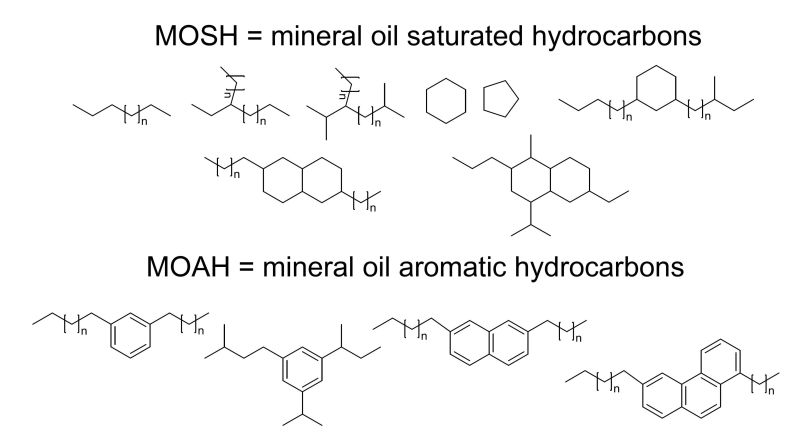
MOAH compounds are of greater concern. Some compounds in this group are considered genotoxic and potentially carcinogenic, and the potential health concern is particularly associated with compounds containing three or more aromatic rings. EFSA published its risk assessment of mineral oil hydrocarbons in 2023. Sources of contamination include lubricants used in processing and packaging materials, which is why the issue concerns the entire supply chain rather than a single production stage.
When will the MOAH maximum levels apply, and what is the status of the regulation?
The draft regulation amending Regulation (EU) 2023/915 on maximum levels for certain contaminants in food received a favourable opinion from the Member States on 13 May 2026 (SCoPAFF committee). Formal adoption by the European Commission is expected in autumn 2026, with publication in the Official Journal of the EU towards the end of the year. As of 14 October 2026, the regulation had not yet been published.
Pending publication, the Member States have agreed that the levels set out in the draft should serve as the basis for enforcement from 13 May 2026. This means that competent authorities may take these values into account even before the new maximum levels start to apply. However, they are not equivalent to the formally applicable maximum levels laid down in Regulation (EU) 2023/915.
The dates of application are staggered: 1 January 2027, 1 March 2027, 1 January 2028, 1 March 2029 and 1 January 2030. Individual product categories are covered from different dates, and the maximum levels for many categories become stricter in subsequent stages.
What MOAH maximum levels are proposed for oils and fats?
The maximum levels apply to the sum of MOAH in the C10–C50 range and are expressed in mg/kg. Below are selected categories from the draft that are relevant to food manufacturers purchasing fats (values from the draft; the final text may differ).
| Category (draft) | from 1.01.2027 | from 1.01.2028 | from 1.01.2030 |
|---|---|---|---|
| Coconut oil (and groundnut oil, sesame oil, cereal germ and bran oils) | 6.0 | 4.0 | 2.0 |
| Other oils and fats, including palm oil, cocoa butter and shea butter | 4.0 | 2.0 | – |
| Fat and oil products (more than 80% fat) | – | 2.0 | – |
| Oils intended for further refining and labelled as such | – | – | 2.0 |
“–” indicates that no threshold is set for the given date in the draft. For other oils, including rapeseed and sunflower oil, the maximum level depends on the category assigned in the final text of the regulation, so this category should be checked in the published act before assessing your own raw materials.
MOSH – action levels instead of maximum levels
No legally binding maximum levels are foreseen for MOSH. The draft recommendation on monitoring for 2026–2029 introduces action levels, for example 15 mg/kg for rapeseed, sunflower and soybean oil, among others, and 30 mg/kg for other vegetable and animal oils and fats. An action level is not a maximum level, but exceeding it is a signal that the food business operator should commission further testing and identify the source of contamination.
How are MOSH and MOAH determined in oils and fats?
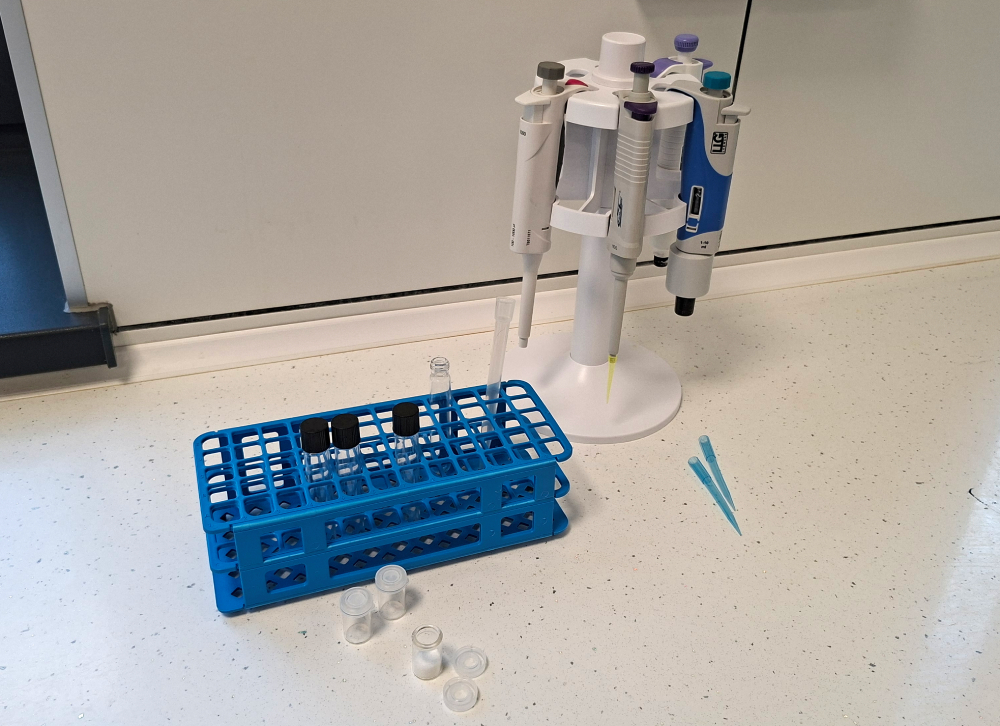
Determining MOSH and MOAH in oils and fats requires appropriately validated analytical methods. One of the core techniques is liquid chromatography coupled with gas chromatography and flame ionisation detection (LC-GC-FID). Given the complexity of the fat matrix, proper sample preparation, elimination of potential interferences and a sufficiently low limit of quantification (LOQ) are of particular importance. Test results should be interpreted in light of the product’s characteristics and the requirements applicable to the food category concerned.
What do the new maximum levels mean for purchasing oils and fats?
For compound foods, maximum levels are calculated on the basis of the ingredients and fat content, so the quality of the fat raw material determines the compliance of the finished product. When discussing these requirements with your supplier, it is worth clarifying:
- whether the supplier tests for MOSH and MOAH in the C10–C50 range, and which methods and limits of quantification it uses,
- which category of the regulation a given raw material falls into, and from when the maximum level applies to it,
- which lubricants and packaging materials are used in production and packaging, including in formats such as frying and salad oils in bottles, IBCs and road tankers.
- which certifications demonstrate compliance with recognised food safety standards, for example BRCGS and IFS.
Are you reviewing your fat raw material portfolio in light of the new maximum levels? We invite you to submit a request for quotation or contact us for a free consultation – we will discuss your raw material requirements and the scope of product information.
—
We discuss another EU regulation affecting the supply chain in our article PPWR and packaging in the food industry.
—
FAQ – MOAH and MOSH in food
Do the MOAH maximum levels already apply?
Not formally, as the regulation has not yet been published in the Official Journal of the EU (as of 14 October 2026). However, the Member States have agreed that the levels in the draft should serve as the basis for enforcement from 13 May 2026, so they already act as a reference point for official controls and analyses.
Are there maximum levels for MOSH?
No. Action levels, not maximum levels, are foreseen for MOSH. Exceeding them should trigger further testing and identification of the source of contamination.
How do MOSH and MOAH get into vegetable oils and fats?
They are usually an unintended contaminant arising during processing and packaging, or originating from environmental sources, for example from lubricants or packaging materials.
Do the maximum levels also apply to products containing oil or fat as an ingredient?
Yes. For compound foods, the level is calculated on the basis of the ingredients covered by maximum levels and the fat content, and for some compound products the rules will only start to apply from 2030.
Sources
This article does not constitute legal advice. Information correct as of 14 October 2026; the content of the final regulation may differ from the draft.
- Commission Regulation (EU) 2023/915 on maximum levels for certain contaminants in food (EUR-Lex)
- AGROLAB Polska: Nowe wartości orientacyjne i dopuszczalne dla MOSH/MOAH od 1 stycznia 2027 r. (14.09.2026)
- Eurofins: MOAH in Food – EU Limits Adopted (June 2026 Update)