


Knowledge base

From a scientific standpoint, however, the issue is more complex.
Today we know that when choosing a fat, it is not enough to ask whether the product is natural, or even how much fat it contains. What matters most is the type of fatty acids it provides and which product it replaces in our diet.
That is why the question ‘butter or margarine?’ is worth reframing:
- Which of these products has the more favourable composition, and in which situations is it worth choosing?
- Butter or margarine? Key takeaways
- Butter consists mainly of milk fat and contains a relatively high proportion of saturated fatty acids.
- Soft margarines, made primarily from vegetable oils, typically contain more monounsaturated and polyunsaturated fatty acids and less saturated fat than butter.
- Past concerns about margarine stemmed largely from the presence of industrially produced trans fatty acids, associated with the use of partially hydrogenated oils. Today’s market, however, looks different.
- From a cardiovascular health perspective, what matters is not only reducing saturated fat but, above all, what we replace it with.
- Replacing some saturated fats with unsaturated fats is in line with current dietary recommendations.
- This does not mean that eating butter occasionally is ‘unhealthy’. What matters is the overall diet, the quantity consumed and what the product is replaced with.
- Not all margarines are the same. When buying, it is worth looking primarily at the type of oils used and the saturated fatty acid content.
How does butter differ from margarine?
Although both products are used in similar ways – most often as a spread for bread, for cooking or for baking – in terms of composition they are two different types of fat.
Butter
Butter is a product obtained from milk or cream. Its main component is milk fat.
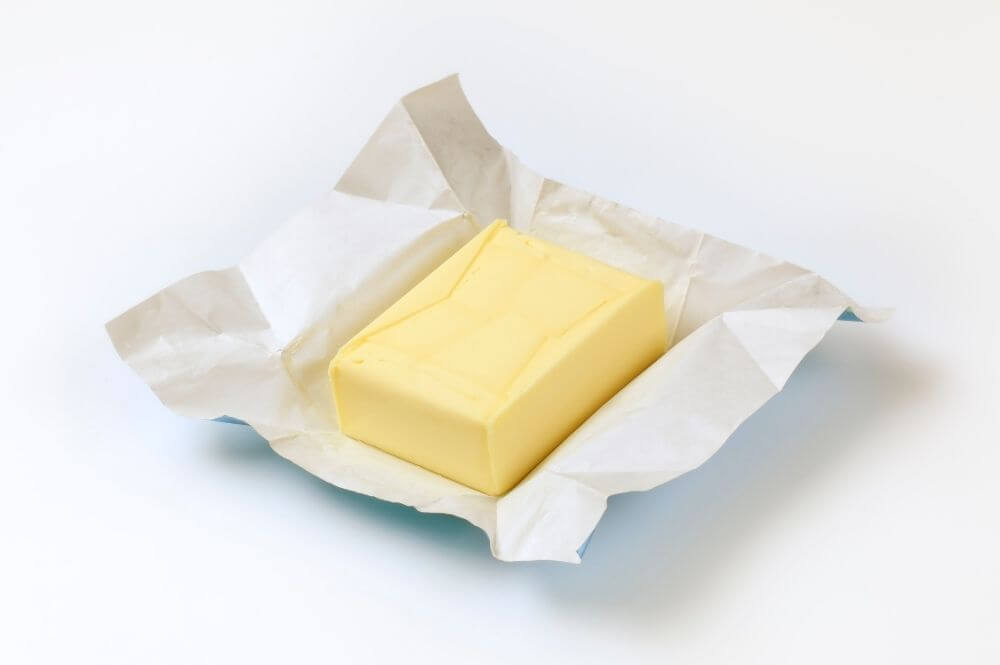
It is characterised by a relatively high content of saturated fatty acids and contains naturally occurring cholesterol. It also provides fat-soluble vitamins, primarily vitamin A, although their levels may vary from product to product.
It is the specific composition of milk fat that also gives butter its characteristic flavour, aroma and culinary properties.
Margarine
Margarine is an emulsion of fat and water in which the fat most commonly comes from vegetable oils and fats.

Its composition, however, can vary considerably between products.
A soft margarine based on rapeseed or sunflower oil may have a completely different fatty acid profile from a hard margarine intended for bakery and pastry applications. For this reason, not all margarines should be treated as a single, uniform nutritional category.
Good-quality soft vegetable margarines typically contain more unsaturated and less saturated fatty acids than butter.
Why is there so much talk about saturated fats?
This is where the heart of the butter vs margarine debate lies.
The World Health Organization (WHO) recommends that, in people aged 2 years and older, dietary fat should come primarily from unsaturated fatty acids, and that saturated fatty acids should account for no more than 10% of total energy intake.
WHO also recommends replacing saturated fats primarily with polyunsaturated fatty acids, monounsaturated fatty acids from plant sources, or carbohydrates from foods containing naturally occurring dietary fibre.
Why?
One reason is the effect of individual fatty acids on LDL cholesterol levels.
LDL is often colloquially referred to as ‘bad cholesterol’, although this is a considerable simplification. From the perspective of cardiovascular disease prevention, however, its concentration is highly significant.
Studies show that replacing some saturated fatty acids with unsaturated fats can lead to favourable changes in the lipid profile.
So it is not simply a matter of the rule:
‘eat less fat’.
A far more important question is:
‘Which fat are you eating less of, and what are you replacing it with?’
Does reducing saturated fat really lower the risk of heart disease?
This is an important question, as online you can find claims both that saturated fats are extremely harmful and that ‘science has completely cleared them’.
Neither of these extreme positions accurately reflects the current state of knowledge.
In a Cochrane systematic review covering 15 randomised trials and more than 56,000 participants, long-term reduction in saturated fat intake was associated with a lower risk of combined cardiovascular events.
The authors estimated the relative risk reduction at around 17%, although the effect on individual endpoints was not uniform.
This is an important distinction.
Science does not say:
‘a single slice of bread and butter causes heart disease’.
What it does indicate is that the long-term composition of the diet, including the type of fats consumed, can influence cardiovascular risk.
Is margarine healthy?
There is no single answer that applies to all margarines.
The assessment of a specific product should depend primarily on its composition.
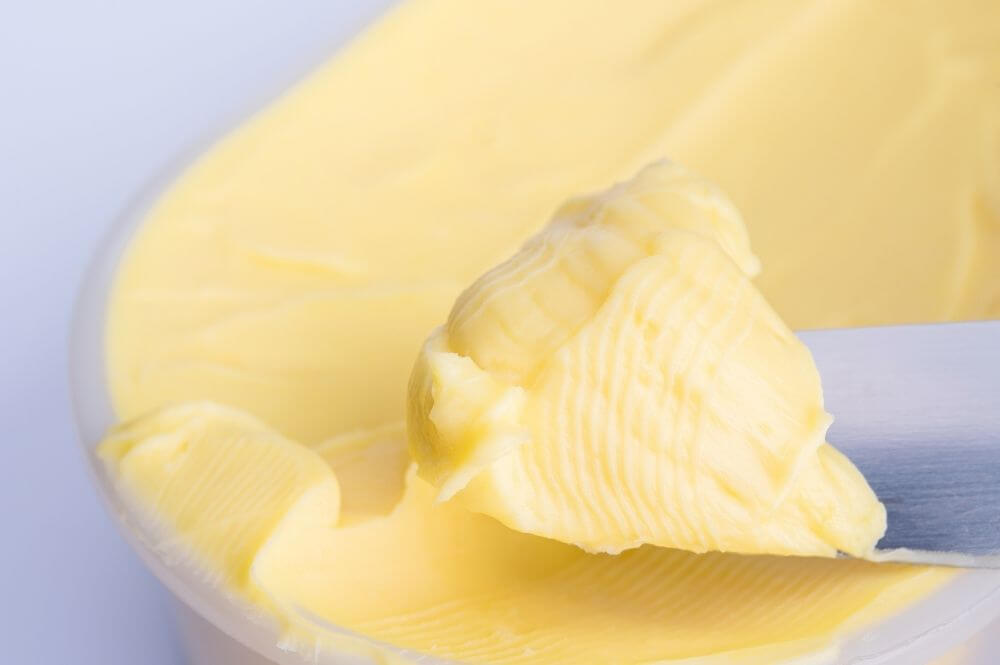
A soft margarine based on vegetable oils rich in unsaturated fatty acids and containing little saturated fat will have a different nutritional profile from a product containing a large amount of saturated fat.
So instead of asking:
‘Is margarine healthy?’
it is better to ask:
‘What is the composition of this particular margarine, and which product is it meant to replace?’
If we replace butter – a product rich in saturated fatty acids – with a soft vegetable fat spread with a higher unsaturated fatty acid content, this swap is in line with the direction of current recommendations on cardiovascular disease prevention.
What about trans fats in margarine?
This is one of the most persistent nutrition myths – although it has a very specific historical origin.
In the past, partially hydrogenated oils were used in the production of some margarines and other foods, and these could supply significant amounts of industrially produced trans fatty acids.
We now know that consuming them is detrimental to cardiovascular health.
WHO recommends limiting intake of all trans fatty acids to less than 1% of total energy intake and has for years been working to eliminate industrially produced trans fats from the food supply.
However, the problems associated with margarines from several decades ago should not be transferred directly to all modern products.
At the same time, it is not advisable to rely on the simplification that every margarine today contains exactly ‘0% trans’. The profile of a given product depends on its formulation and the fats used.
Is butter unhealthy?
No.
Such a statement would be just as much of an oversimplification as claiming that every margarine is unhealthy.
Butter is rich in fat and saturated fatty acids, so consuming it in large amounts can make it harder to follow recommendations on limiting saturated fat intake.
This does not mean, however, that eating butter occasionally or in small amounts automatically turns a healthy diet into an unhealthy one.
Interesting data come from a meta-analysis of prospective studies published in 2016, covering more than 600,000 participants. It found no significant association between butter consumption and total cardiovascular disease risk; it did, however, find a small association with all-cause mortality and an inverse association with the incidence of diabetes.
One very important limitation must be borne in mind, though: these were primarily observational studies.
They do not directly answer the question:
- What happens if we replace butter with a specific alternative source of fat?
And it is precisely this question that is far more useful for everyday dietary decisions.
Butter vs margarine – which is better for heart health?
If the choice is between:
butter rich in saturated fatty acids
or
a soft margarine based on vegetable oils, containing less SFA and more MUFA and PUFA,
then, from the standpoint of fatty acid profile and current cardiovascular health recommendations, a well-chosen soft vegetable margarine has the advantage.
But there is also a third option.
You do not always have to choose between butter and margarine.
Sources of unsaturated fatty acids also include, among others:
- olive oil,
- rapeseed oil,
- nuts,
- seeds and kernels,
- avocados,
- fish that provide omega-3 fatty acids.
That is why the butter vs margarine question should be part of a broader conversation about the quality of the diet as a whole.
What about margarine with plant sterols?
This is a separate product category that should not be equated with ordinary margarine.
Some spreads are enriched with plant sterols or stanols, which can reduce cholesterol absorption in the digestive tract and consequently lower LDL levels.
This effect is well documented.
A meta-analysis of 124 randomised trials demonstrated a dose-dependent LDL-lowering effect of plant sterols and stanols. A more recent systematic review and meta-analysis of studies on phytosterol-enriched foods also confirmed a significant reduction in LDL.
This does not mean, however, that everyone should buy this type of margarine.
Products enriched with sterols or stanols have a specific purpose and should not be treated as a ‘healthier margarine for everyone’. They may be particularly relevant for people aiming to lower elevated LDL cholesterol levels.
How do you choose a good margarine?
Do not rely solely on the claims on the front of the pack.
Check the nutrition declaration and the list of ingredients.
In practice, it is worth paying attention to a few elements:
- Saturated fat content
Compare several products. For a similar application, the product with a lower saturated fatty acid content will usually be the better choice.
- Type of fats used
Rapeseed oil, for example, can be a good ingredient, as it provides mainly unsaturated fatty acids.
- Product type
A soft tub margarine and a hard bakery fat can differ significantly in composition. They should not be assessed in the same way just because both are sometimes referred to as margarine.
- The overall diet
Even a product with a good fatty acid profile remains a concentrated source of energy. The quantity consumed and the context of the overall eating pattern therefore also matter.
Plant-based butter vs margarine – are they the same?
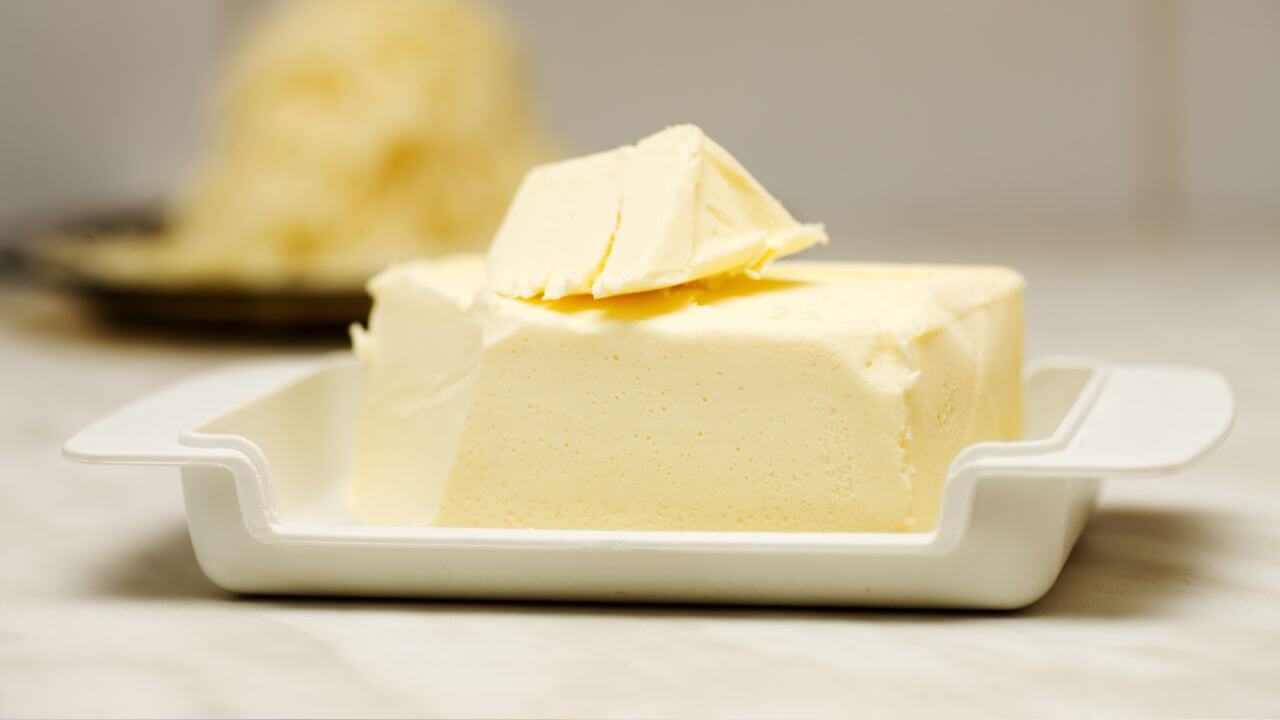
The term ‘plant-based butter’ is often used colloquially to refer to plant-based spreads.
From the consumer’s point of view, however, the composition of the product matters more than its name.
Two plant-based spreads can look almost identical and yet differ significantly in their proportions of saturated and unsaturated fats.
That is why, when buying, it is best to look primarily at the nutrition declaration and the list of ingredients.
Should people with high cholesterol switch from butter to margarine?
For a person with elevated LDL cholesterol, limiting sources of saturated fatty acids and replacing some of them with sources of unsaturated fats can be one element of dietary management.
In practice, this may mean, among other things, replacing some of the butter with a soft margarine with an appropriate fatty acid profile, but also using olive oil, rapeseed oil, nuts or seeds more often.
However, the treatment of hypercholesterolaemia should not be reduced to choosing what to spread on your bread.
What matters is the diet as a whole, body weight, physical activity, smoking, genetic factors and – where indicated – appropriate pharmacological treatment.
Butter or margarine for frying and baking?
Here, the answer does not depend on health considerations alone.
The product’s functional properties, the cooking temperature, flavour and the specific recipe also count.
Butter is valued in baking primarily for its characteristic flavour and sensory properties. For higher-temperature cooking, clarified butter is also used.
Margarines designed for baking can provide the right structure and texture in baked goods, but their composition may differ from that of soft margarines intended for spreading.
Therefore, the argument:
‘soft margarine has a more favourable fatty acid profile’
cannot automatically be extended to all bakery fats available on the market.
Butter vs margarine – the final verdict
Looking solely through the lens of cardiovascular health, there is no need to demonise butter. Nor is there any basis for demonising modern margarines simply because products bearing that name several decades ago could contain significant amounts of industrial trans fats.
It is much better to look at the issue through the lens of the fatty acid profile and the diet as a whole.
If butter is replaced with a soft vegetable margarine containing less saturated and more unsaturated fat, this change is in line with current recommendations on dietary fat quality.
If, on the other hand, someone occasionally spreads butter on their bread while following a diet rich in vegetables, fruit, whole grains, pulses, nuts, fish and good sources of vegetable fats, there is no reason to treat that portion of butter as a nutritional disaster.
The key question, then, is not ‘butter or margarine?’ but: which fats dominate our everyday diet?
FAQ – butter vs margarine
Which is healthier: butter or margarine?
If we compare butter with a soft vegetable margarine containing less saturated and more unsaturated fatty acids, then in terms of fat profile such a margarine will usually be the better choice for cardiovascular health.
This does not mean, however, that butter is a product a healthy person must avoid completely.
Does margarine contain trans fats?
Historically, some margarines contained significant amounts of industrially produced trans fatty acids, mainly as a result of the use of partially hydrogenated oils.
However, this should not be the basis for judging all modern margarines. Composition depends on the specific product and the raw materials used.
Does butter raise cholesterol?
Butter contains a high proportion of saturated fatty acids. The type of fatty acids in the diet affects the lipid profile, and replacing some SFA with appropriate unsaturated fats can lead to lower LDL.
Which margarine is best?
There is no single best margarine for everyone. When choosing, it is worth looking for soft vegetable-based products with a high proportion of oils rich in unsaturated fatty acids and, above all, comparing saturated fat content across products.
Is butter or margarine better for high cholesterol?
With elevated LDL, replacing some sources of saturated fatty acids with sources of unsaturated fats may be beneficial. For this reason, a well-chosen soft vegetable margarine may have an advantage over butter.
For people with dyslipidaemia, however, dietary decisions should form part of a broader management plan agreed with a doctor or dietitian.
Does margarine with plant sterols lower cholesterol?
Yes. Randomised trials and their meta-analyses indicate that foods enriched with adequate amounts of plant sterols or stanols can lower LDL cholesterol levels. Such products do, however, have a specific purpose and are not necessary for everyone.
References and key scientific sources
- World Health Organization (2023). Saturated fatty acid and trans-fatty acid intake for adults and children: WHO guideline.
Current WHO guidelines on the intake of saturated and trans fatty acids and their replacement with other dietary components. - Hooper L. et al. (2020). Reduction in saturated fat intake for cardiovascular disease. Cochrane Database of Systematic Reviews.
A systematic review and meta-analysis of randomised controlled trials assessing the effect of reducing saturated fat intake on cardiovascular events. - Reynolds A. et al. Saturated fat and trans-fat intakes and their replacement with other macronutrients: a systematic review and meta-analysis of prospective observational studies. World Health Organization.
A systematic review prepared to inform the update of WHO recommendations, analysing not only SFA and TFA intake but also the significance of the nutrients that replace them. - Mensink R.P. Effects of saturated fatty acids on serum lipids and lipoproteins: a systematic review and regression analysis. World Health Organization.
A comprehensive analysis of controlled dietary studies on the effects of individual fatty acids on blood lipids and lipoproteins. - Pimpin L. et al. (2016). Is Butter Back? A Systematic Review and Meta-Analysis of Butter Consumption and Risk of Cardiovascular Disease, Diabetes, and Total Mortality. PLoS ONE.
A meta-analysis of prospective studies on butter consumption, cardiovascular disease, diabetes and mortality. - Ras R.T. et al. (2014). LDL-cholesterol-lowering effect of plant sterols and stanols across different dose ranges: a meta-analysis of randomised controlled studies. British Journal of Nutrition.
A meta-analysis of 124 studies on the effect of plant sterols and stanols on LDL levels. - Fontané L. et al. (2023). Use of phytosterol-fortified foods to improve LDL cholesterol levels: A systematic review and meta-analysis. Nutrition, Metabolism and Cardiovascular Diseases.
A more recent systematic review and meta-analysis on the effect of phytosterol-enriched foods on LDL.
Note: This article is for educational purposes and does not replace individual medical or dietary advice. In cases of hypercholesterolaemia, cardiovascular disease or other metabolic disorders, dietary choices should be tailored to the individual’s health situation.