


Knowledge base
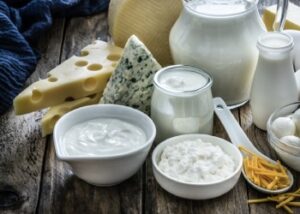
Why Is the Dairy Industry Turning to Plant-Based Fats?
Milk fat – such as butter and industrial cream – ranks among the most price-volatile raw materials in the food industry. Fluctuations in global market prices, seasonal supply patterns, and growing demand for premium butter are making production cost planning based solely on milk fat increasingly difficult. Plant-based dairy fats address this challenge as raw materials offering consistent availability, reproducible parameters, and pricing independent of dairy market cycles.
Cost Pressure and Raw Material Stability
For facilities producing dairy and dairy-analogue products at scale, differences in fat raw material costs translate directly into unit margins. Substituting milk fat with plant-based fat not only reduces formulation costs but also insulates production from fluctuations in raw milk procurement prices and the butter market. The critical requirement, however, is that the substitution be technically complete – the finished product must retain its expected texture, spreadability, melting point, and phase behaviour.
Regulations and Composition Transparency
The use of plant-based fats in dairy-analogue products is strictly regulated under EU law – products must be clearly labelled as analogues or plant-fat-based products. This is not a constraint but a clearly defined market space in which many manufacturers of cheese analogues, cream substitutes, and fat powders already operate. Selecting appropriately certified raw materials – including clean label, palm-free, or RSPO-certified otions – allows manufacturers to meet the requirements of export markets and retail chains.
Cream Substitutes – Technological Requirements for Plant-Based Fats
Cream substitutes represent one of the most demanding applications in the dairy industry. Industrial cream – whether for processing, foodservice, or retail applications – must exhibit a defined fat content, a uniform fat emulsion structure, and stability across various thermal processes.
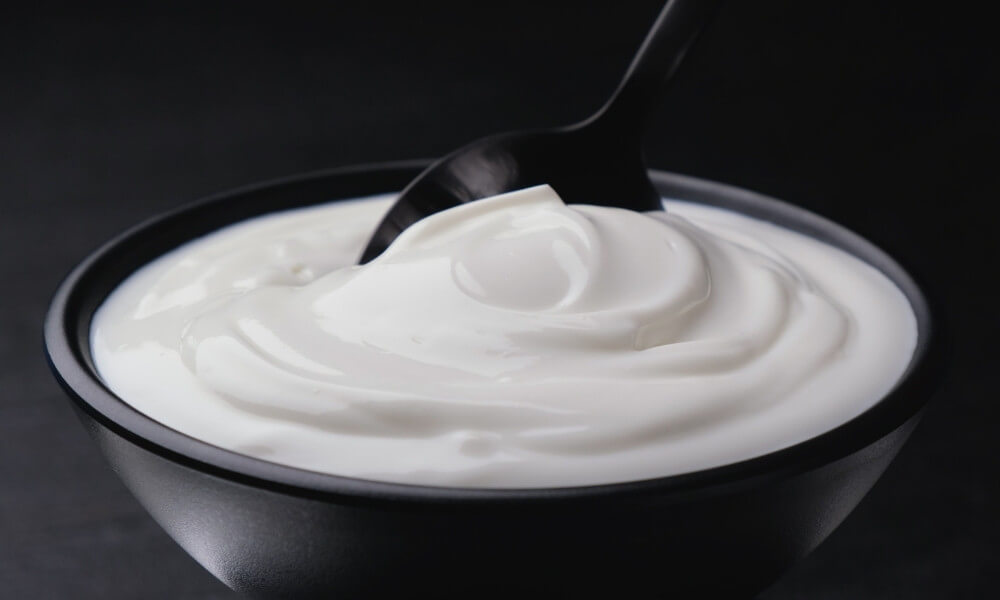
Cream Substitute for UHT and Sterilised Products
A cream substitute designed for UHT processing requires a plant-based fat with high oxidative stability, an appropriate melting profile, and the ability to form a stable emulsion in the aqueous phase. Key parameters include emulsion stability under high-temperature conditions, resistance to homogenisation, and the absence of any tendency towards coalescence or fat phase destabilisation. Fats used in these applications must be selected with reference to the specific production line – the type of homogeniser, process temperature, and emulsifier system composition all directly influence the stability of the finished product.
Cream Substitutes for Fermented Products
In the case of cream substitutes for fermented products – sour cream, crème fraîche, and yoghurt analogues – the behaviour of the plant-based fat during fermentation and refrigerated storage becomes critically important. The fat must demonstrate crystalline stability across storage temperatures (+2 to +6°C), not promote syneresis within the gel matrix, and maintain sensory neutrality in the presence of bacterial cultures. Selecting the fat fraction with an appropriate SFC profile across the 5–20°C temperature range is the starting point for any formulation in this category.
Cheese Analogues – Plant-Based Fats in Cheese Substitute Production
Cheese analogues – encompassing analogues of aged cheeses, processed cheeses, and pizza cheeses – represent one of the fastest-growing segments within the dairy-analogue product category. The cheese analogue market is growing in both the retail channel and the HoReCa segment, where raw material costs carry particular significance.
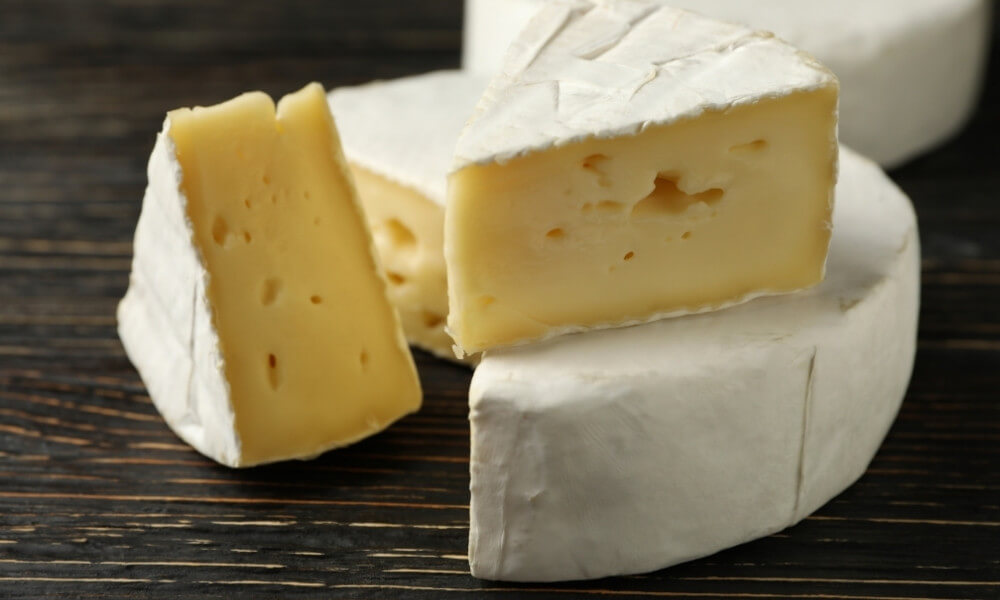
What Fat Properties Determine the Quality of a Cheese Analogue?
A cheese analogue of good technological quality requires a plant-based fat with a precisely defined melting curve. Critical requirements include appropriate firmness at slicing temperatures (approx. 4–8°C), plasticity at room temperature, and complete melt-in-the-mouth characteristics, which ensures proper flavour release. The SFC (Solid Fat Content) profile of the fat should be selected individually according to the type of cheese analogue; indicative solid fat ranges for each application are shown below:
| Analogue type | Required SFC @ 10°C* | SFC @ 20°C | SFC @ 35°C |
| Hard / sliced cheese | 55–70% | 25–40% | <5% |
| Pizza / processed cheese | 45–60% | 15–30% | <3% |
| Soft / spreadable cheese | 20–35% | 5–15% | <2% |
* Values are indicative and require validation in specific formulations and manufacturing processes.
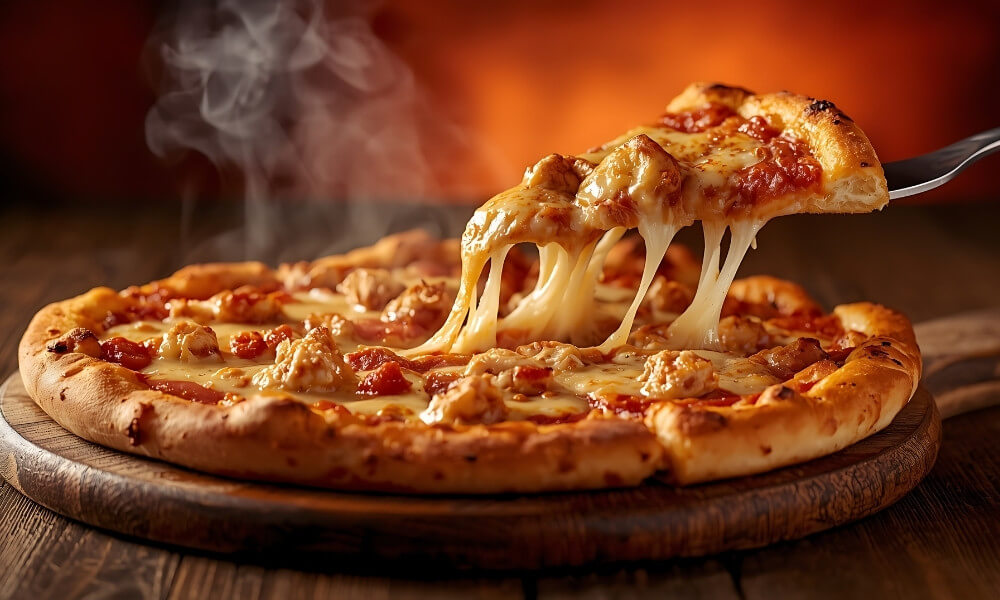
Fat Behaviour During Oven Melting – A Key Parameter for the Pizza Segment
For manufacturers of cheeses intended for pizza applications, the behaviour of the cheese analogue during oven heat treatment is of particular importance. The plant-based fat must support correct melting of the cheese mass, stretchability, and golden browning without excessive fat bleed-out. Achieving these properties requires precise fat selection – the type of fraction, appropriate blending or interesterification, and the possible use of emulsifier systems.
Processed Cheese Substitutes and Cheese Analogues for Industry
The production of processed cheese substitutes – used in sandwiches, snacks, and ready meals, among other applications – requires plant-based fats capable of forming stable emulsions in a protein–water matrix and maintaining stability during thermo-mechanical processing in the presence of melting salts. The correct behaviour of the fat during emulsification with protein and water determines the uniformity and texture of the finished product.
Milk Powders and Fat Powders – Applications of Plant-Based Fats
Plant-based fats in the form of spray-dried emulsions or as components for powder production represent an important category in industrial dairy processing. Products of this type are used in:
- powdered milk preparations,
- coffee creamers,
- cappuccino-type products,
- and nutritional preparations, including foods for special dietary purposes.
The key technological requirements for a fat intended for spray drying are: high oxidative resistance, a neutral flavour profile, appropriate dispersion in the pre-drying emulsion, and stability during powder storage (temperature, humidity, water activity). Plant-based fats used in this application must exhibit low free fatty acid (FFA) content and high oxidative stability, as measured by the Rancimat method or the OXITEST method.
Technical Parameters of Plant-Based Fats for the Dairy Industry – What to Look Out For?
Selecting a plant-based fat for dairy applications goes beyond simply choosing a raw material with a given melting point. A complete technical specification should cover at least the following parameters:
- SFC profile (Solid Fat Content) – at 10°C, 20°C, 30°C, and 35°C – determines texture, plasticity, and mouthfeel behaviour
- Melting point (Slip Melting Point) – determines fat behaviour during processing and consumption
- Oxidative stability – particularly important when extended shelf life of the finished product is required
- Trans fatty acid content (TFA) – EU regulatory requirements (max. 2 g/100 g in fat intended for consumption) and market preferences
- Fatty acid composition – including the proportion of saturated, monounsaturated, and polyunsaturated acids
- Free fatty acid content (FFA) and peroxide value (PV) – as indicators of raw material quality
- Neutral flavour / sensory neutrality – essential in products where the flavour profile should be determined by the protein and bacterial culture rather than the fat
Certifications for Plant-Based Dairy Fats – Trans-Free, Palm-Free, Clean Label, and RSPO, Halal, and Kosher
Certification requirements in industrial dairy processing vary depending on the target market and the buyer’s procurement policy. Plant-based dairy fats can be supplied in the following certified variants:
- Trans-free – absence of trans fatty acids (below 2% in the fat) – a regulatory requirement in the EU since 2021; the expected standard among most retail chains and exporters is <1%
- Palm-free – raw material free from palm oil and its fractions – a response to consumer expectations and the CSR policies of food manufacturers
- RSPO (Roundtable on Sustainable Palm Oil) – certification for the sustainable sourcing of palm oil – for customers who accept palm oil but require documented environmental responsibility
- Clean label – a market trend encompassing the reduction of additives and the use of simple, recognisable ingredients, aligned with consumer expectations
- BIO / Organic – organic raw materials compliant with EU organic production regulations (EU Regulation 2018/848) and equivalent frameworks
- Halal / Kosher – certification confirming the compliance of raw materials and production processes with the religious requirements of Islam (Halal) and Judaism (Kosher), covering both the selection of raw materials (e.g. absence of prohibited ingredients) and the control of the manufacturing process and production line cleaning procedures; essential for export markets and products targeting consumers with specific religious requirements.
The appropriate certification pathway can be determined during the technical consultation stage – prior to the commencement of production.
How Does Rafsol Group Support Dairy Producers in Selecting Plant-Based Fats?
Rafsol Group supplies plant-based dairy fats as technological raw materials tailored to specific production applications. Technical support encompasses not only the supply of products with technical data sheets, but a full advisory cycle:
- Formulation and process analysis – identifying the technological parameters that the plant-based fat must meet in a given application (process temperature, emulsifier system, storage conditions)
- Product selection or custom formulation development – from a portfolio of over 1,300 products or as a bespoke product
- Technological testing – support during trial implementation at the customer’s facility or under laboratory conditions
- Cost optimisation – review of raw material substitution options while maintaining quality parameters
- Certification and documentation – complete technical documentation and certificates as required by the end customer
Deliveries are available in formats appropriate to production scale: carton packaging on pallets, pails, IBC containers, and bulk tanker deliveries.
FAQ – Plant-Based Fats in the Dairy Industry
Can plant-based fat fully substitute milk fat from a technological standpoint?
In many industrial applications – yes, provided the fat is correctly selected for the specific process and formulation. The critical factors are matching the SFC profile, thermal behaviour, and sensory neutrality. In applications such as processed cheeses, cheese analogues, UHT cream substitutes, and fat powders, the substitution of milk fat is technically mature and widely used by leading producers across Europe. Functional and sensory differences arise when there are very high requirements for the characteristic milk fat flavour profile – in such cases, the use of natural flavourings to complement the sensory profile is possible.
What SFC parameters are required for cheese analogues?
The SFC profile for a cheese analogue depends on the type of finished product. For hard and sliced cheeses, SFC at 10°C typically falls within the 55–70% range, with a steep decline above 35°C. For pizza cheeses, a lower level of solid fat under refrigerated conditions is required, while maintaining meltability and stretchability during baking. Each application requires individual selection – we recommend a technical consultation prior to commencing production.
Are plant-based cream substitutes suitable for UHT processing?
Yes, provided the plant-based fat meets the requirements for thermal stability and emulsification. Key parameters include: stability of the emulsion system at UHT temperatures (135–145°C), resistance to fat phase coalescence after homogenisation, sensory neutrality following the thermal process, and the ability to maintain appropriate viscosity and structure after cooling. The correct selection of the emulsifier system and homogenisation parameters also plays an important role, as these factors determine the stability of the finished product to an equal degree as the nature of the fat itself.
Are plant-based dairy fats available in a palm-free version?
Yes. Rafsol Group offers plant-based dairy fats in a palm-free version. The availability of a specific variant depends on the application and the required technical parameters – in some applications, the elimination of palm oil requires modification of the fat formulation.
RSPO-certified products are also available for customers who accept palm-origin raw materials certified under the SG or MB supply chain models.
What does the process of implementing a new plant-based fat on a production line look like?
The standard implementation process comprises: a technical consultation, supply of a sample for testing at the customer’s facility, potential modification of fat parameters based on test results, finalisation of the specification, and commencement of regular deliveries. For complex applications, Rafsol Group offers the support of a food technologist during production trials.
Rafsol Group offers milk fat substitutes tailored to specific applications – from cheese analogues and cream substitutes to fat powders and fermented products. Contact our technical team to discuss your production requirements and request samples or a detailed quotation.