

Rapeseed oil production is a multi-stage industrial process combining agronomy, food engineering and advanced refining. Understanding this supply chain – from seed to finished raw material in its packaging – is directly relevant to anyone assessing supplier quality, verifying process documentation or formulating products that contain rapeseed oil.
This article covers:
- How rapeseed oil is made – the complete technological sequence from cultivation to filling
- What refined rapeseed oil delivers and how refining differs from cold pressing
- Who the rapeseed oil producers in Poland are and how the market is structured
- What drives the price of rapeseed oil on the wholesale market and how to analyse it
- How to select the best rapeseed oil for a specific industrial application
How Rapeseed Oil Is Made – From Seed to Crude Oil
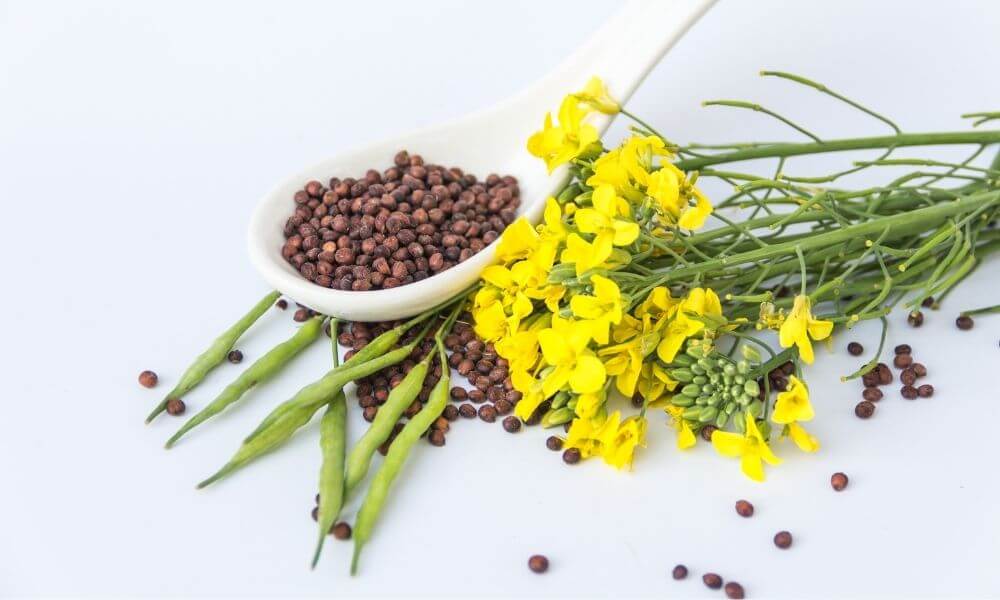
How rapeseed oil is made – the process begins in the field. The raw material is the rapeseed (Brassica napus var. oleifera), with a fat content of 38–48% of dry matter. Polish rapeseed oil is produced exclusively from double-zero (00) varieties: free of erucic acid (below 0.1%) and glucosinolates (below 25 µmol/g), as required by the EU Common Catalogue of Varieties of Agricultural Plant Species.
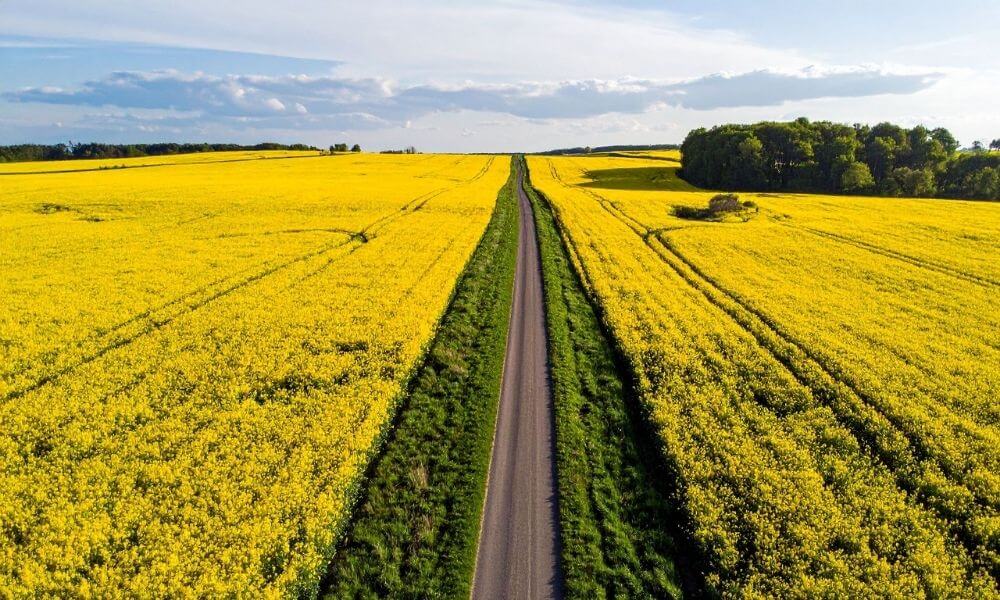
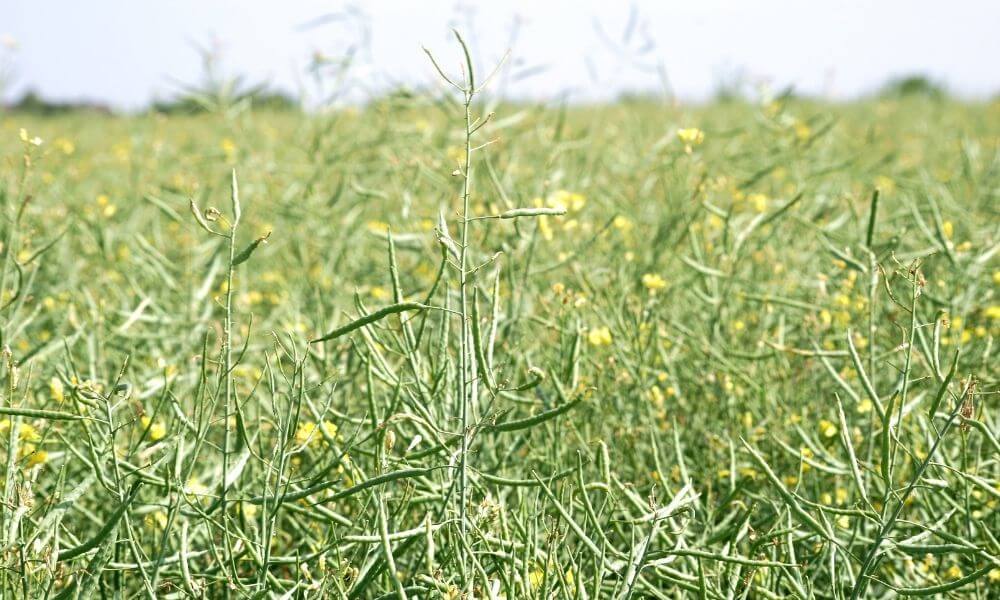
Polish rapeseed oil benefits from a strong raw material base – Poland ranks among the leading rapeseed producers in the EU, with annual harvests of 3–4 million tonnes of seed. Harvesting takes place in July and August; after harvest, the seeds are transported to grain elevators, where they are dried to a moisture content of below 8% and cleaned of mechanical impurities.
Pre-pressing – Mechanical Oil Extraction
The cleaned rapeseed, conditioned to 70–90°C, is fed into screw presses. The mechanical pressure extracts oil from the seed mass. Pre-pressing yields:
- Crude oil – containing visible suspensions and phospholipids, which requires further processing
- Rapeseed press cake – seed cake with a fat content of 8–14%, passed on to solvent extraction
The pressing stage recovers 70–80% of the oil available in the seed.
Solvent Extraction – Complete Defatting of the Press Cake
The press cake undergoes hexane extraction in counter-current industrial extractors (Carousel, De Smet types). Hexane dissolves the remaining fat, forming what is known as miscella. The miscella is transferred to a distillation unit, where hexane evaporates under reduced pressure and is recovered in a closed-loop system. Extraction efficiency reaches 98–99% of available fat. The crude oil obtained from extraction is combined with the pressed oil and directed to refining.
The resulting solvent-extracted meal (protein content 34–38%) enters the animal feed industry as a valuable component in poultry and pig rations.
Refined Rapeseed Oil – Refining Stages and Their Technological Significance
Refined rapeseed oil is the product of crude oil that has undergone a multi-stage purification process, conferring neutral sensory characteristics, high oxidative stability and the shelf life required for food applications.
| Refining stage | Technological purpose | Substances removed |
| Degumming | Removal of phospholipids | Lecithins, gums, mucilaginous substances |
| Neutralisation | Reduction of FFA | Free fatty acids, soaps |
| Bleaching | Colour improvement | Chlorophyll, carotenoids, oxidation products, trace metals |
| Deodorisation | Neutralisation of taste and odour | Volatile acids, aldehydes, residual pesticides |
Deodorisation is carried out at 240–260°C under high vacuum (2–5 mbar) with direct steam stripping. When properly controlled, deodorisation does not generate trans fatty acid isomers – levels of geometric isomers in refined rapeseed oil produced in modern facilities are below 1% and often below the detection threshold of reference analytical methods.
After refining, rapeseed oil exhibits:
- Neutral taste and odour – essential in formulations where the sensory profile of the fat must remain imperceptible
- Smoke point of approx. 230°C – enabling industrial frying applications
- Low FFA (below 0.1%) and low peroxide value (PV below 2 meq O₂/kg)
- Shelf life of 12 months in sealed packaging
Rapeseed Oil Producers in Poland – Market Structure
Rapeseed oil producers in Poland form a market dominated by several large processing groups operating at the intersection of agribusiness and the food industry. Rapeseed oils in Poland are produced by operators active across three segments:
- Crushing plants: industrial extraction facilities processing seeds into crude oil and meal. These are typically large-scale plants with a processing capacity of 500–3,000 tonnes of seed per day, located close to growing regions or bulk-handling ports.
- Oil refineries: facilities refining crude oil to food-grade standard, often independent of crushing plants – purchasing crude oil on the spot or contract market.
- Packagers and private label producers: companies bottling, packaging and commercialising finished oil in retail and industrial formats, offering own-label products.
A rapeseed oil producer in Poland often integrates several links in the value chain or specialises in a single one. Industrial-segment rapeseed oil producers serve both the domestic market and export – Poland is one of the larger rapeseed oil exporters in the EU.
Rafsol Group, as a rapeseed oil producer for industrial applications, offers rapeseed oils to the following specifications: refined, high oleic, organic and non-GMO – in packaging formats ranging from bottles and pails (1–22 L) through bag-in-box cartons and IBC containers to bulk tanker deliveries.
Rapeseed Oil Price – Key Drivers and B2B Procurement Analysis
The rapeseed oil price on the wholesale market is a function of several interrelated factors. Industrial procurement requires a thorough understanding of these drivers in order to manage price risk effectively and plan raw material budgets.
Key price drivers:
- Rapeseed futures on commodity exchanges (Euronext Paris, CBOT) – the primary cost component; the oil price is closely correlated with the seed price.
- EUR/PLN and USD/PLN exchange rates – rapeseed and oil are priced in EUR on European markets; a weakening złoty raises the cost of imports and the domestic raw material price base.
- Energy costs – refining, transport and storage are energy-intensive; increases in gas and electricity prices feed directly into processing costs.
- Biofuel sector demand – rapeseed oil is the primary feedstock for HVO and FAME biodiesel; the biofuel boom drives demand and pushes up prices.
- Harvest seasonality – the July–September period (post-harvest) has historically shown the lowest price levels; March–June marks the seasonal peak with the highest prices.
- Speculation – the rapeseed oil price is subject to activity by investment funds*, which dominate commodity markets such as CBOT and Euronext. Hedge funds and speculative funds, managing billions of dollars, respond to global risk factors – from weather events in Canada and Australia, through geopolitical tensions, to currency fluctuations and inflation. Their large-scale buying or selling creates price spikes that are independent of actual industrial supply or demand. As a result, rapeseed oil quotations increasingly behave as a financial instrument rather than a reflection of fundamental market conditions.*
- Correlation – the rapeseed price is closely linked to conditions across the broader vegetable oil market. A shortfall in sunflower oil drives up its price, prompting buyers to seek cheaper alternatives such as rapeseed oil. This in turn increases demand for rapeseed, directly pushing up its price. These interdependencies demonstrate that the vegetable oil market functions as a system of communicating vessels, where shifts in one segment ripple through the others.
Rafsol Group offers flexible pricing models tailored to volume, delivery schedule and the chosen product specification.
Best Rapeseed Oil for the Food Industry – Selection Criteria
The best rapeseed oil for a given application is the one that optimally meets technical, certification and logistics requirements at an acceptable total cost of ownership (TCO). There is no single “best” oil – there is only the best oil for a specific process.
Key selection criteria:
- Oxidative stability (OSI at 110°C): a minimum value of 8 hours for standard frying applications; above 20 hours for continuous frying – in which case high oleic is the preferred choice.
- Fatty acid profile: relevant when developing nutritional claims (source of omega-3, trans-free, low saturated fat).
- FFA content and PV at goods receipt: freshness indicators; the buyer should require a Certificate of Analysis (CoA) with every delivery.
- Certifications: EU organic, non-GMO, Halal, Kosher – depending on the target market and end-customer requirements.
- Packaging format and logistics: bottles/pails for foodservice, bag-in-box, IBC and tankers for industrial production.
- Raw material traceability: confirmation of the country of seed origin and supplier audit capability.
FAQ
Can rapeseed oil from Poland be certified as organic?
Yes. Organic rapeseed oil is derived from organically certified crops (grown without synthetic pesticides or mineral fertilisers) and produced in compliance with EU Regulation 2018/848. Each batch carries a certificate issued by an approved certification body. Producers specialising in organic oil operate dedicated production lines or carry out audited line changeovers.
What is the difference between rapeseed oil and turnip rape oil?
Turnip rape oil is derived from turnip rape, a winter variety with smaller seeds that was traditionally cultivated in Poland before the widespread adoption of modern winter oilseed rape. Turnip rape oil contained significant levels of erucic acid. Today, the term is sometimes used interchangeably with “rapeseed oil,” which is inaccurate – under EU food law, “rapeseed oil” refers exclusively to oil from double-zero (00) varieties.
Where does the rapeseed oil available on the European market come from?
The dominant source is EU production: Germany, Poland, France, the Czech Republic and Romania. A share of supply comes from imports: Ukraine, Canada and Australia. For industrial procurement requiring full traceability, the country of seed origin and the location of the refinery should be specified in the delivery documentation (CoO, CoA).
Are you looking for refined, high oleic or certified-standard rapeseed oil for your food production? Rafsol Group supplies rapeseed oils in formats from 3 L to full tanker loads, with CoA documentation, sample availability and flexible commercial terms.
