


Knowledge base
Harvesting and Rapaseed and Sunflower Seed Preparation
The process of vegetable oils production begins in the fields, where rapeseed and sunflower mature under natural conditions. Seeds are harvested at the optimal moment – when oil content is at its highest (minimum 37%) and moisture is optimal (below 9%). After harvesting, the seeds are cleaned of impurities such as dust, chaff, and stem residues, then dried to the appropriate moisture level, ensuring their stability and preventing oxidation processes. Only then do they enter storage facilities, ready for pressing.
In Poland, rapeseed is the primary domestic raw material. According to data from the Polish Association of Oil Producers (PSPO), approximately 3,500 thousand tons of rapeseed were processed in Poland during the last season (2024/2025).

Vegetable Oil Pressing
In the next stage, seeds enter the press. Oil can be extracted in two ways.
Cold Vegetable Oil Pressing
Cold pressing, where seeds are gently pressed at temperatures below 40°C. This process yields oil with a more distinctive taste, aroma, and high content of bioactive compounds – vitamin E, plant sterols, and omega-3 fatty acids. However, it is intended only for cold consumption and is not suitable for industrial production. Additionally, such oil has a much shorter shelf life, darker color, and sediment may occur.
Hot Vegetable Oil Pressing
Hot pressing, where the process takes place at higher temperatures (approximately 80–100°C). This process is conducted in large facilities. It allows for increased efficiency and consequently lower production costs. Furthermore, oil subjected to hot pressing, after further processing (refining), is characterized by: long shelf life and high oxidation resistance, light and clear color, and neutral taste. After hot pressing, oil extraction from press cake occurs using organic solvents.
Crude oil
After pressing, crude oil is produced, containing natural accompanying substances – phospholipids, free fatty acids, and pigments. To give it perfect clarity and neutral taste, it undergoes the next stage – refining.
Vegetable Oil Refining
The refining process consists of several precise stages:
- Removal of phospholipids and proteins using steam
- Reduction of free fatty acids using mild alkaline solutions
- Filtration through various substances that absorb pigments and improve oil color
- Removal of volatile aromatic compounds – the oil gains a delicate taste and aroma
Vegetable Oil Packaging
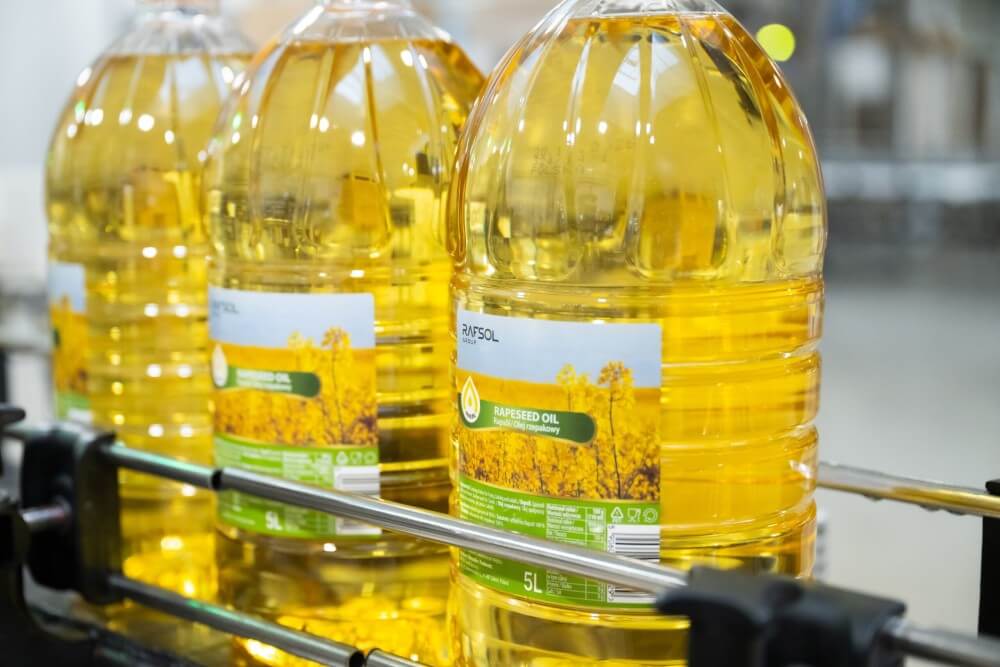
The final stage is preparing the finished vegetable oil for shipment. Bottling into individual packages takes place at our modern, certified production facility in Zabrze. Rafsol Group offers rapeseed oil and sunflower oil – oils are packaged in 3, 5, and 10L bottles, 10L bag-in-box packaging, reusable 1000L IBC containers, or tanker deliveries.
The rapeseed and sunflower oils, as well as their blends, offered by Rafsol Group perform excellently in the kitchen – for frying, baking, and as a base for salads, sauces, and mayonnaise.
We believe that true quality begins in the field and ends in the bottle – that’s why we supervise every stage of production and work only with verified and certified suppliers, so that the oil reaching your hands combines natural origin, safety, and excellent taste.